Visit Vättern

The Bikepack went to sleep in Borghamn, with ninety-five kilometres and nine hundred and forty metres of climbing behind, and a lake outside the window doing something they had run out of adjectives for. Come along on day two!
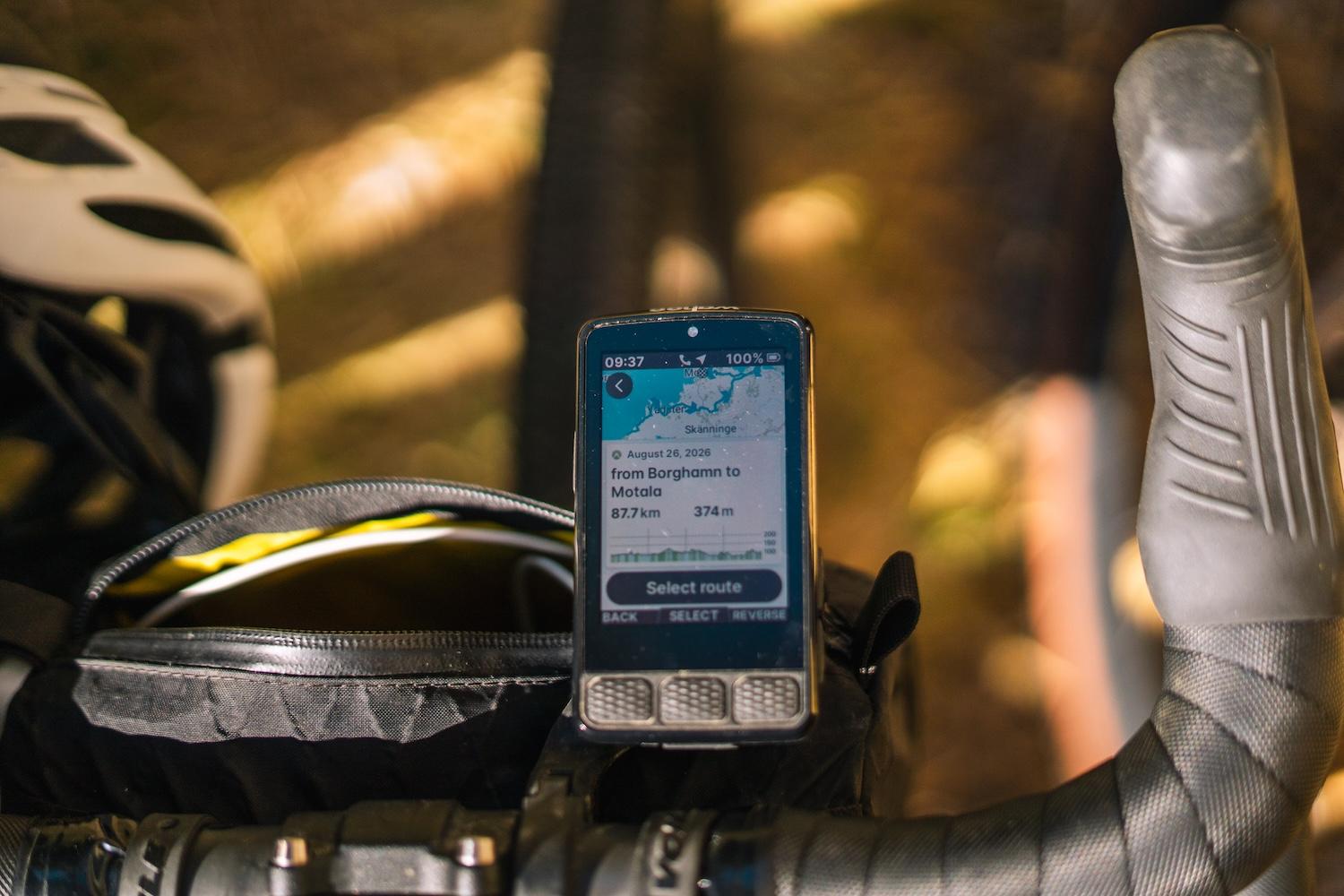
In the morning the lake was still there, and it had not moved a millimetre. That is the first thing about day two: the water at the foot of Omberg at eight in the morning is not calm, it is stopped. Flat enough to make you check whether you are looking at the lake or at the sky reflected off it. We stood in the doorway with coffee and looked at it for longer than two grown adults should admit to.
The breakfast, pancakes. Bread and things to put on it. Eggs. Coffee that was genuinely good, which at that hour is the only review anyone needs. Standard-issue rocket fuel for cyclists, in other words, and we took on a quantity of it that we would describe as strategic.
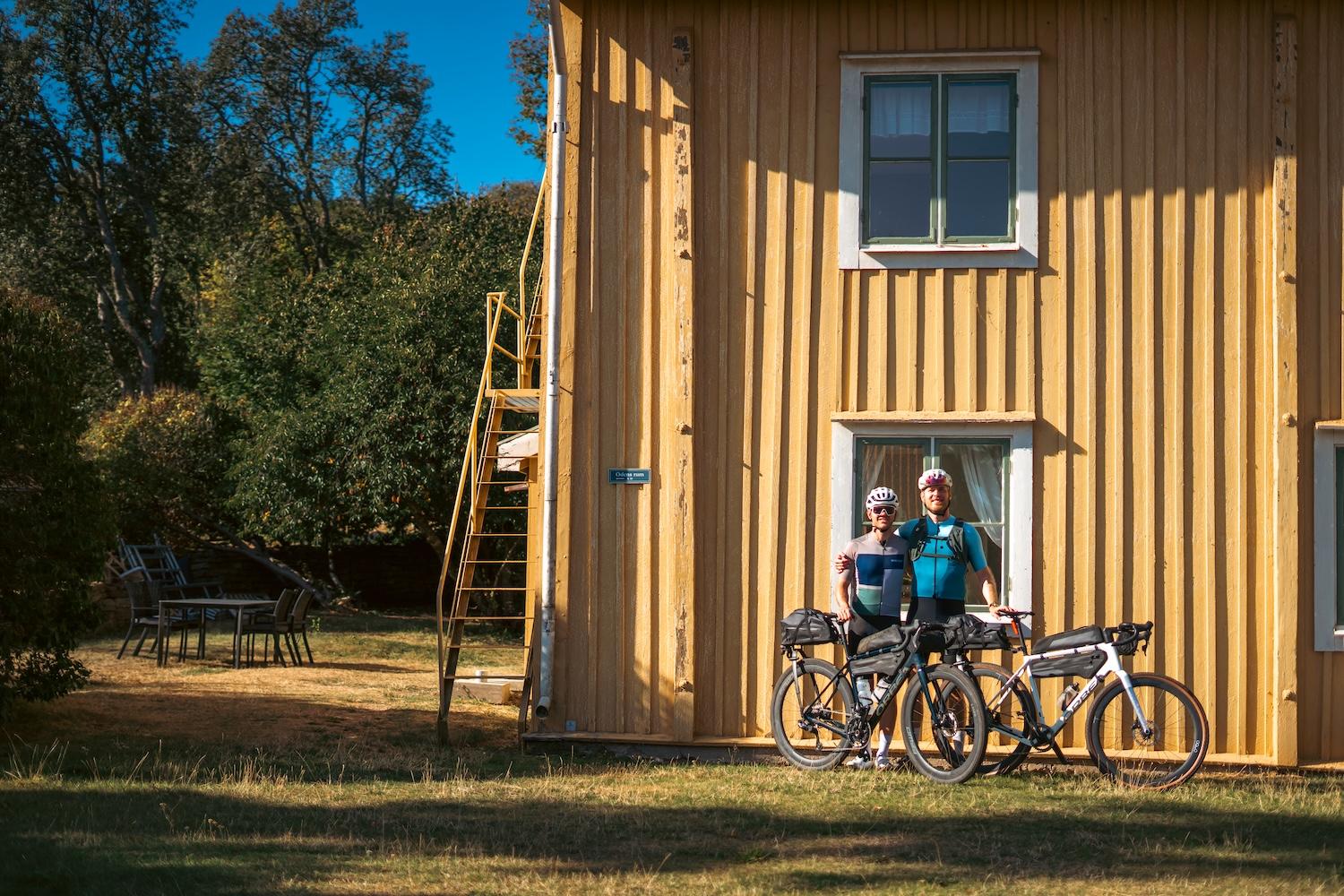
Here is something for anyone who has ridden Halvvättern: you have stood roughly where we were eating those pancakes. Borghamn is one of its depåer. It is a hundred and fifty kilometres out of Motala and back, and Omberg's climbs – the ones we came over yesterday evening in the beech shade, glimpsing the lake between trunks – are the thing the whole race is known for testing your legs on. Same hill. Same shore. We had slept on it.
Then out into a morning that was already warm, with the bikes pointed north and the entire day's character about to change.
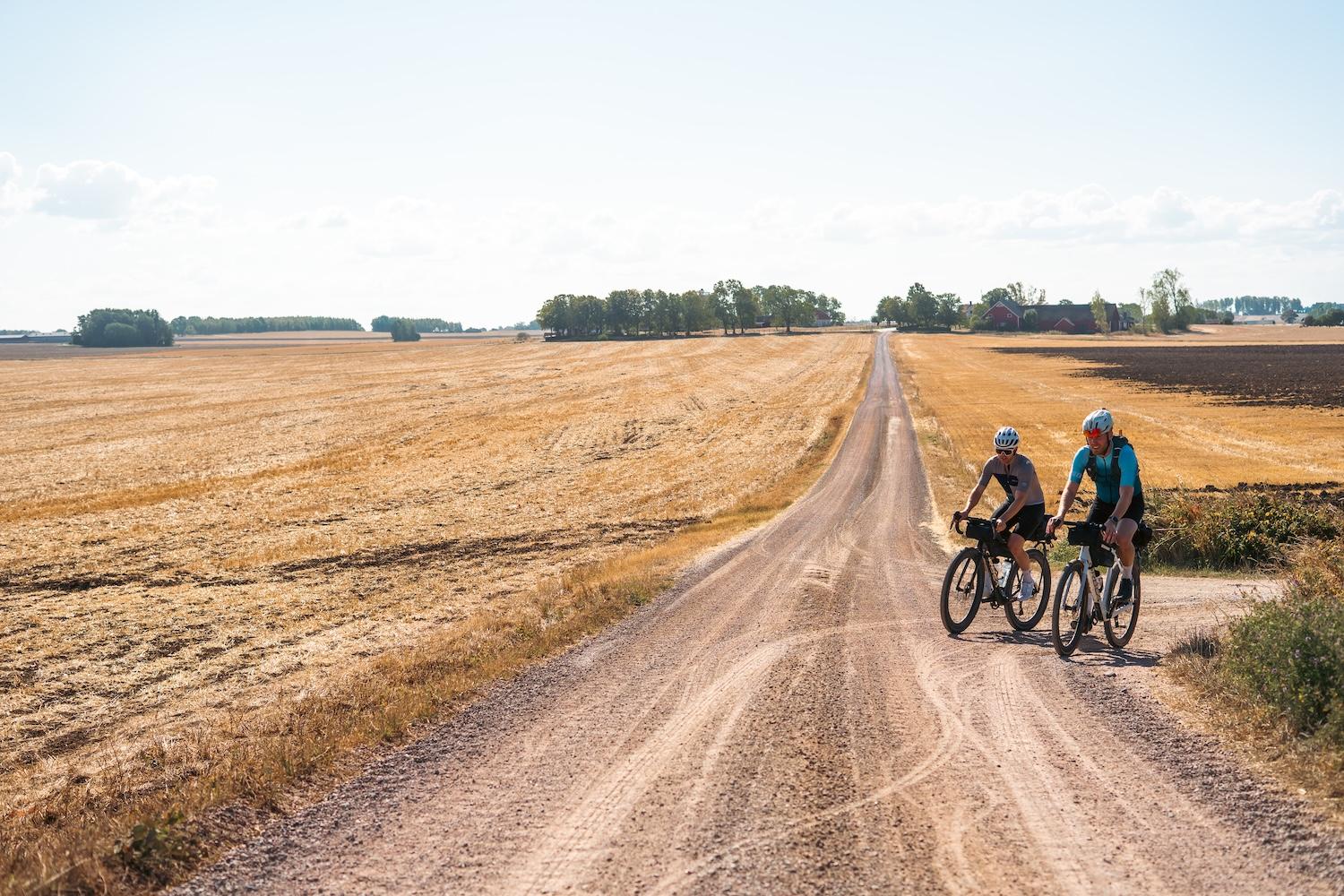
Day one was a climbing day. Day two is a surface day. The numbers tell it plainly enough – yesterday was three-quarters asphalt, today is barely half, with nearly a third unpaved and a sixth of it path and singletrack. But numbers are not the experience. The experience is the noise.
Within a few hundred meters of leaving we were on it: dry, hard-packed, fast gravel, the kind that has been baked all August and gives you back almost everything you put in. It chatters. It comes up through the bars as a fine continuous rattle and through the tyres as a low hiss, and if you are on the right rubber it feels less like a compromise than like the road has finally started talking to you.
We named the day about twenty minutes in. "Smooth gravel," one of us said, apparently as a serious technical classification, and it stuck, and we said it roughly forty more times before Motala.
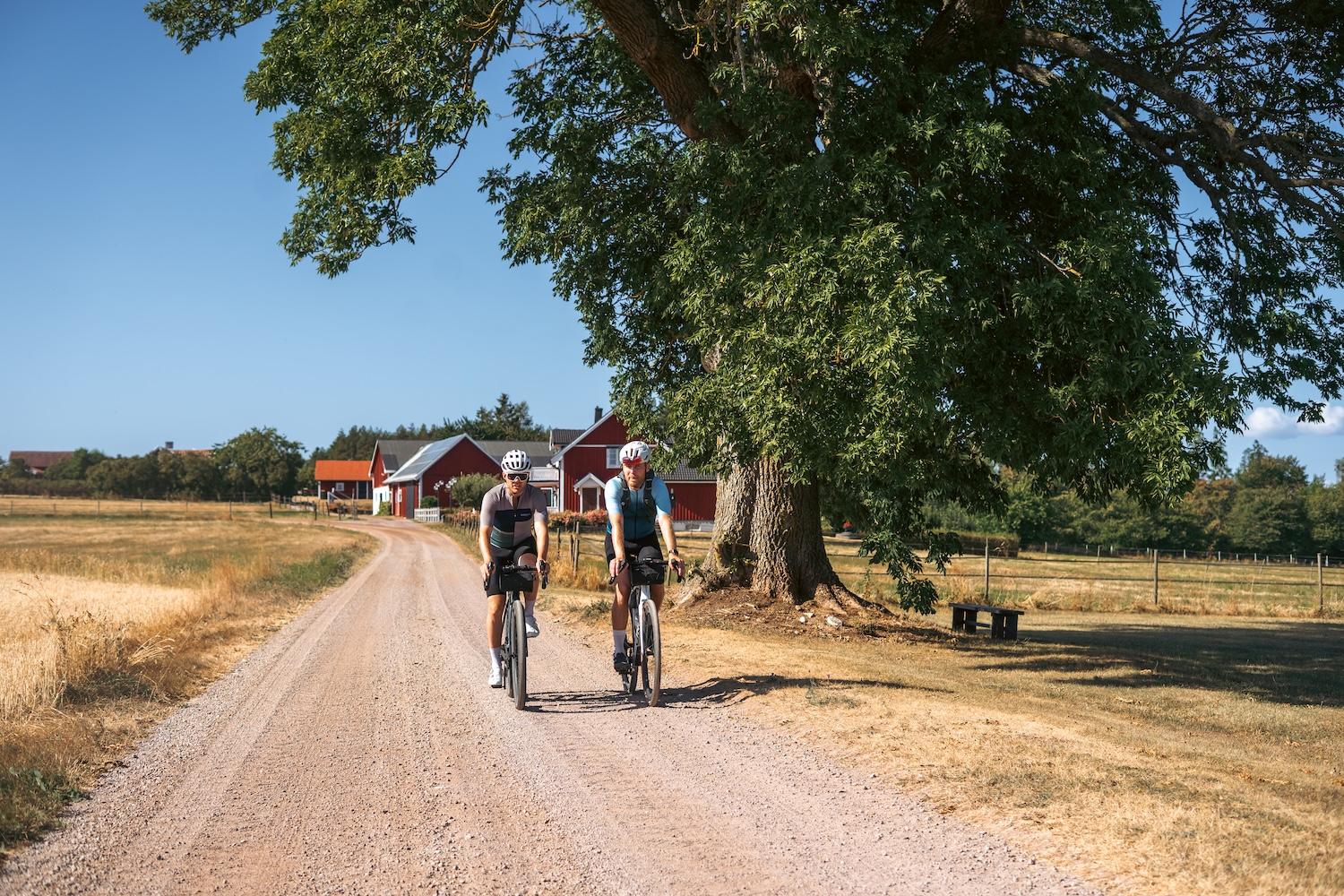
This is also where the tyre argument gets settled, so let us settle it: we were on Orbea Terras running 40cc and 45cc, and on day one that is mild overkill. On day two it is simply correct. Twenty-nine per cent unpaved and sixteen per cent path is not a route you talk yourself onto with 32s and optimism, and the difference is not whether you can ride it — you can — but whether you spend the day riding or the day negotiating.
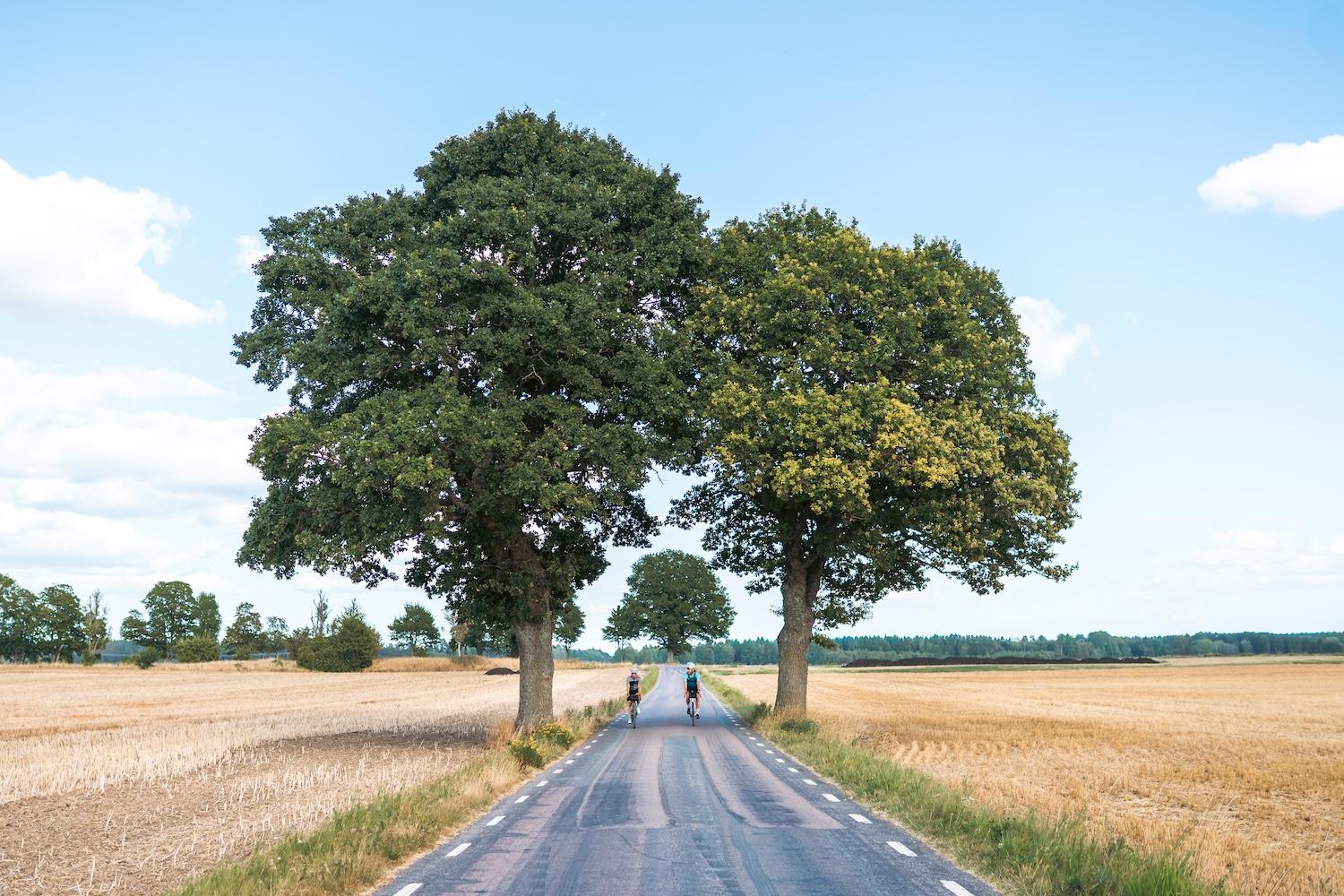
And the country it runs through is ridiculous. Wheat in that heavy late-August gold, right up to the edge of the road. The lake off to the left as a hard blue line. Small red houses with white corners, one after another, at intervals that felt deliberate. Long flat straights, warm wind, nothing to do but turn the pedals.
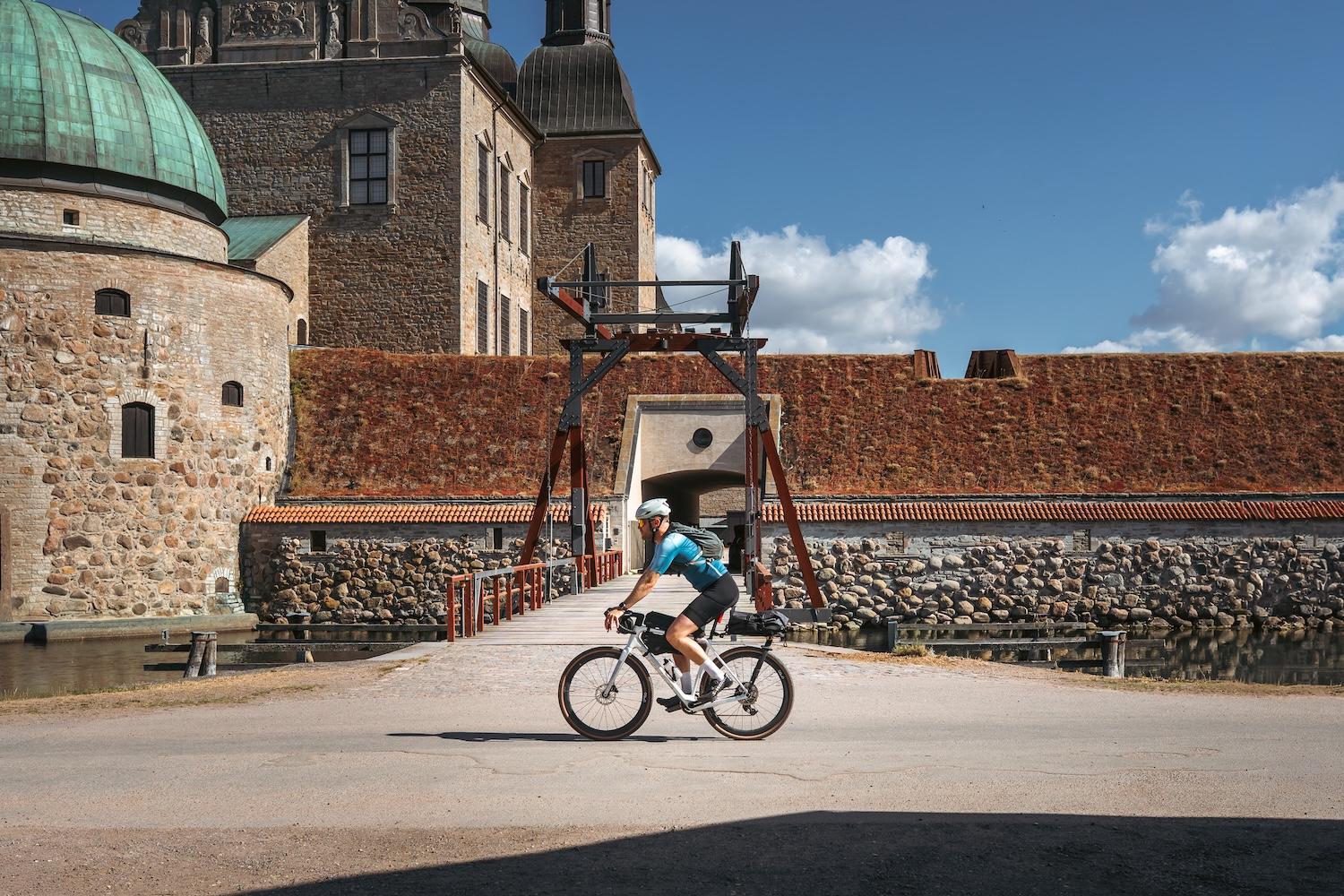
Vadstena arrives at the water and announces itself with a castle. Gustav Vasa started it in 1545, and not as anything charming – it was a fortress, built to stop an enemy coming at Stockholm from the south. Three ramparts thirty-one metres wide. A moat. Four round cannon towers. The kind of building that is doing a job.
Then his sons got hold of it. From the 1550s, under Prince Magnus, it was steadily converted into somewhere to live, and the work carried on until 1620, by which point every king of the Vasa line had had a go at it. What you ride up to now is one of the best renaissance buildings in Sweden – sitting on the shore of Vättern with its moat full and its reflection in it. The provincial archive has been inside since 1899, and in summer the courtyard hosts Sweden's smallest opera house.
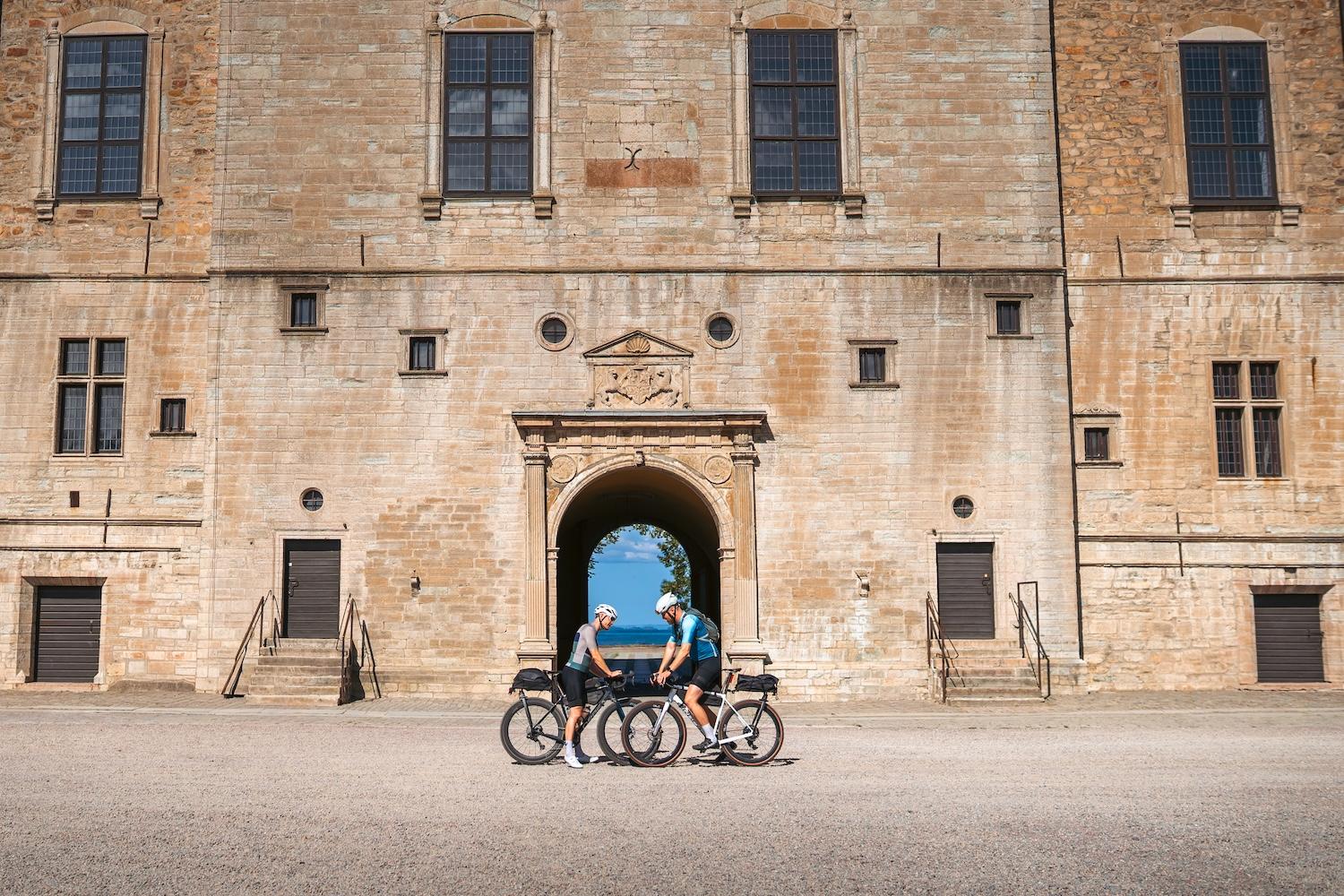
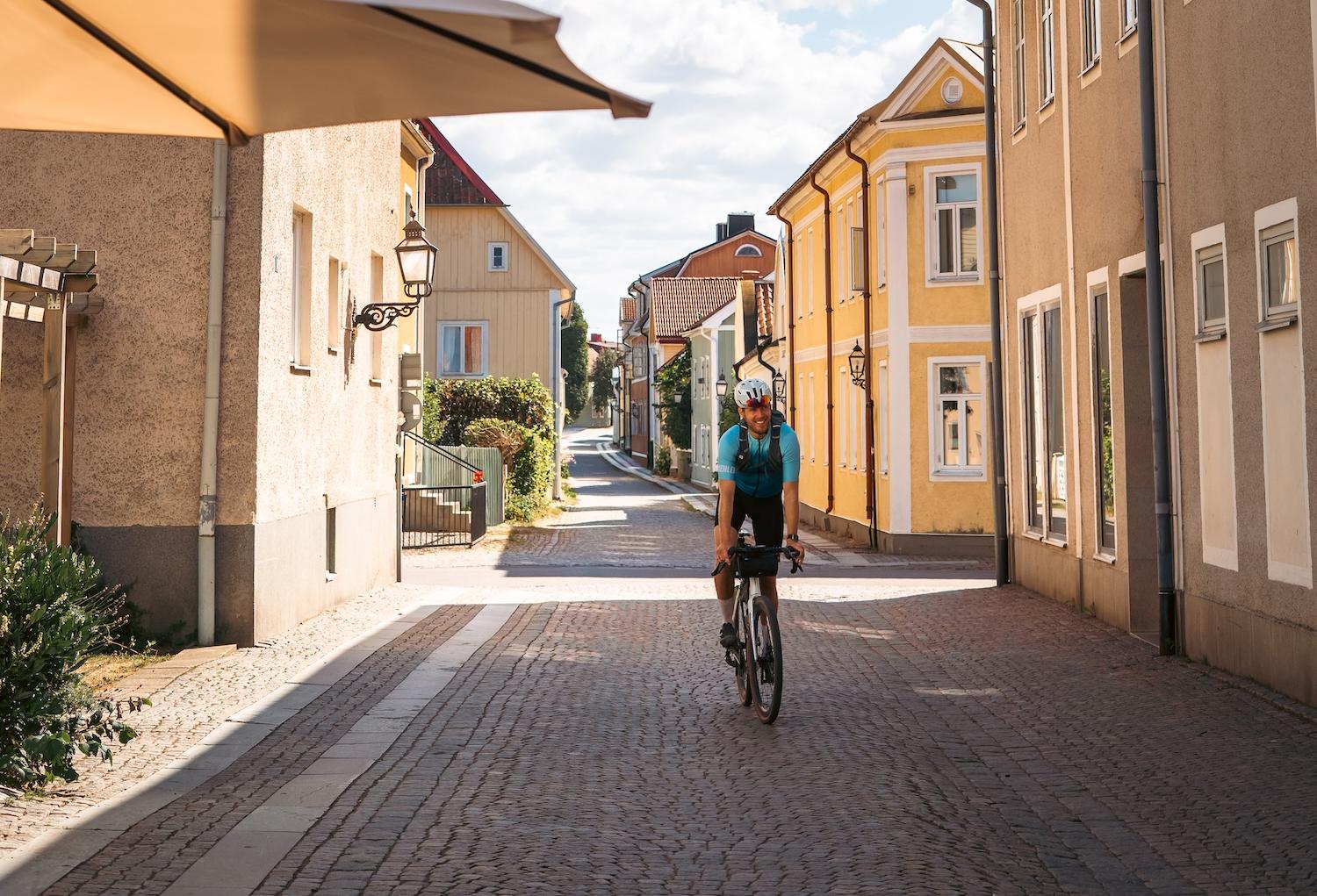
The town behind it is older than the castle by a century and a half. Vadstena got its charter in 1400 – which is to say the town was already a town before Gutenberg built a printing press, and had been one for ninety years by the time Columbus set off. Its town hall is the oldest in Sweden. The streets are mainly sixteenth, seventeenth and eighteenth century and have not been rearranged since, which is why riding through them feels less like sightseeing and more like trespassing in a very well-kept past.
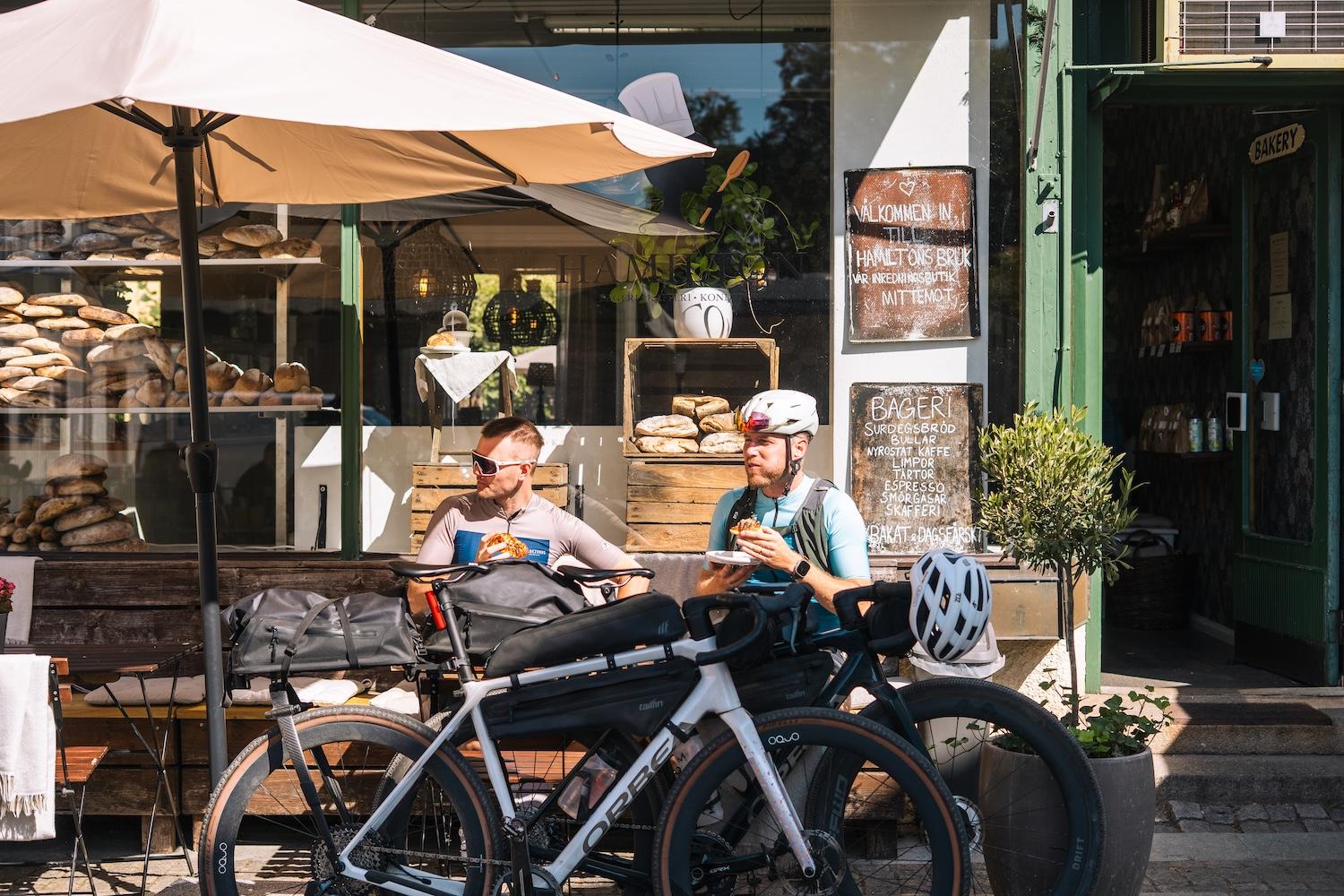
We stopped at Bageri Hamilton on Hovsgatan for a bun and a coffee, both of which qualified at that point as medical interventions, and then rolled out through the cobbles at the speed of people who have entirely stopped being in a hurry.
And then the abbey, which is the strangest and best thing in the town. Birgitta – Saint Bridget, the one the whole Bridgettine order comes from – did not just found it, she specified it. The church was to be simple, humble and strong: a hall church with three naves of equal height, whitewashed, no painted windows. And she had it built backwards. The entrance is in the east and the high altar in the west, the opposite of essentially every church of its era, because she wanted pilgrims to move through it in a particular direction. The monastery was consecrated in 1384 and the church in 1430, and her reliquary is still inside, holding her remains and her daughter Katarina's.
There has been a living convent here again since 1973, when nuns arrived from Uden in the Netherlands. It takes guests.
What we missed – and you shouldn't
The inside of both. We saw the castle from the moat and the abbey from the street, because we had a lagoon to find and a town called Motala to reach.
The castle is open daily 11:00–16:00 from 17 August to 4 October, with guided tours, and drops to shorter hours through the winter. The Sancta Birgitta Klostermuseum sits in the medieval royal palace that Magnus Eriksson and Queen Blanka handed over in 1346 to start the whole thing.
Between them that is an easy two hours, and we had zero of them.
Three days, not two?
Night two of the three-day version is Vadstena, and of all the arguments for taking your time on this route, this is the strongest one.
You arrive in the afternoon with a castle, an abbey, a medieval town and Sweden's oldest town hall in front of you and no reason to leave any of it. Then you sleep in a town of five thousand people on the edge of an inland sea. The convent guesthouse is a genuine option and an odd, lovely one.
Day – Gränna to Vadstena · 77.2 km · 630 m
That version also takes you past the Nässja stone circle, which sits about eight kilometres short of Vadstena castle – a ring of standing stones in a field, with nobody there. It is on our day two as well, and we rolled straight past it, which we now regret in writing.
Before leaving Vadstena we did the single most useful thing either of us did all trip, which was buy lunch in a supermarket. Swedish supermarkets have excellent salad bars. Not sad ones – proper ones, where you fill a box yourself and pay by weight, and you choose exactly what you want and exactly how much of it. For a cyclist it is close to a cheat code.
One refinement, offered free of charge and learned the hard way: walk the bar backwards. All the good stuff – is clustered at the far end. Start at the normal end and you will have filled your box with lettuce and cucumber by the time you reach it, and you will stand there doing the arithmetic of regret. Start at the far end and work back. You are welcome.
Then our route took a turn, because we had got wind of something.
There is a place out here that the locals keep close to their chest. We only knew because we asked – the way you find things like this is still, in 2026, to ask a local and then listen properly. What followed was a wonderful hour of not being on the main line at all: field edges, forest paths, narrow gravel winding across open ground, the GPS occasionally suggesting we reconsider.
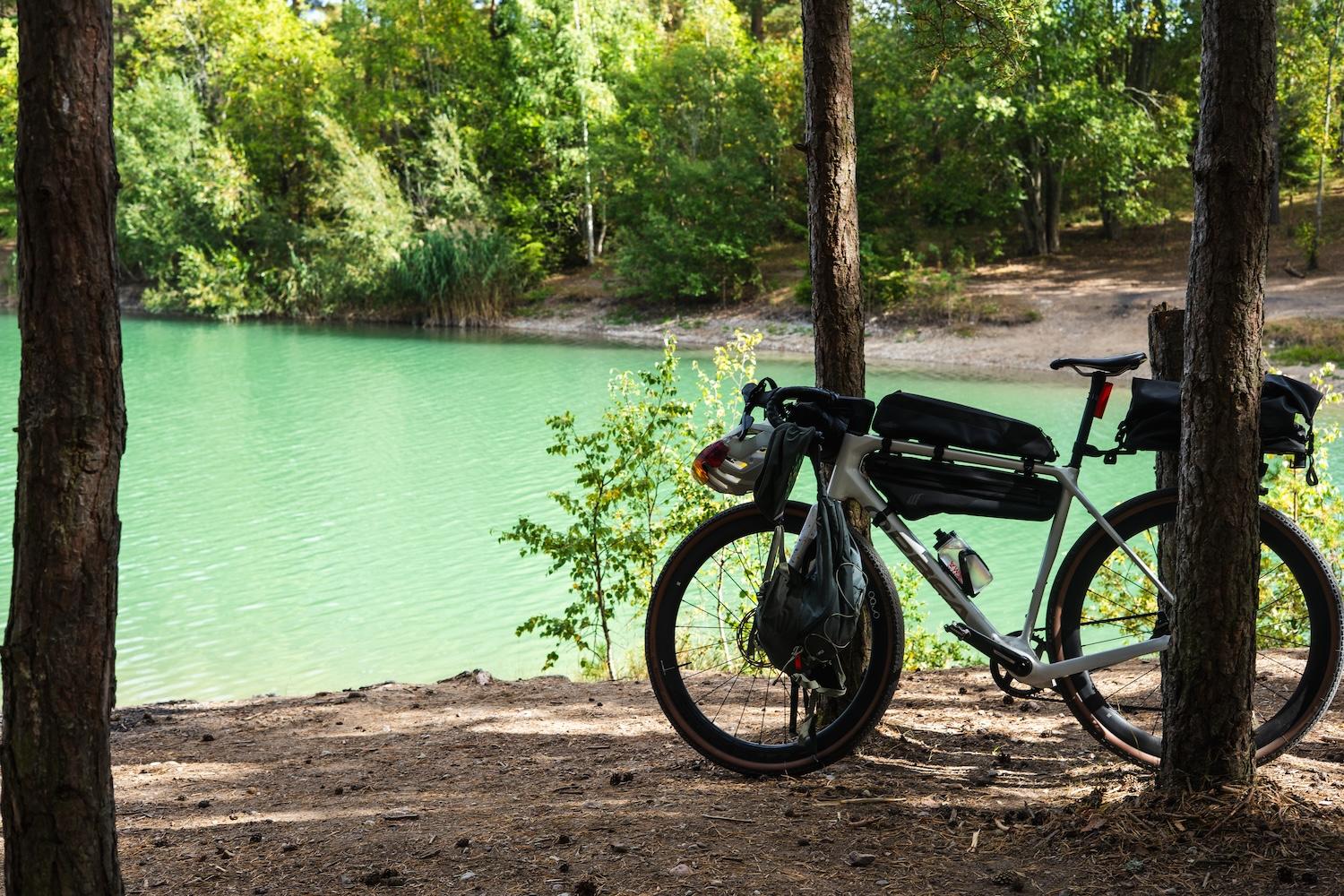
There is no car park. That is the whole point. There is a small lay-by, barely a gap, and then a path that drops down into trees. We swung off the road, went down through the woods with the bikes hopping over roots, and the forest opened.
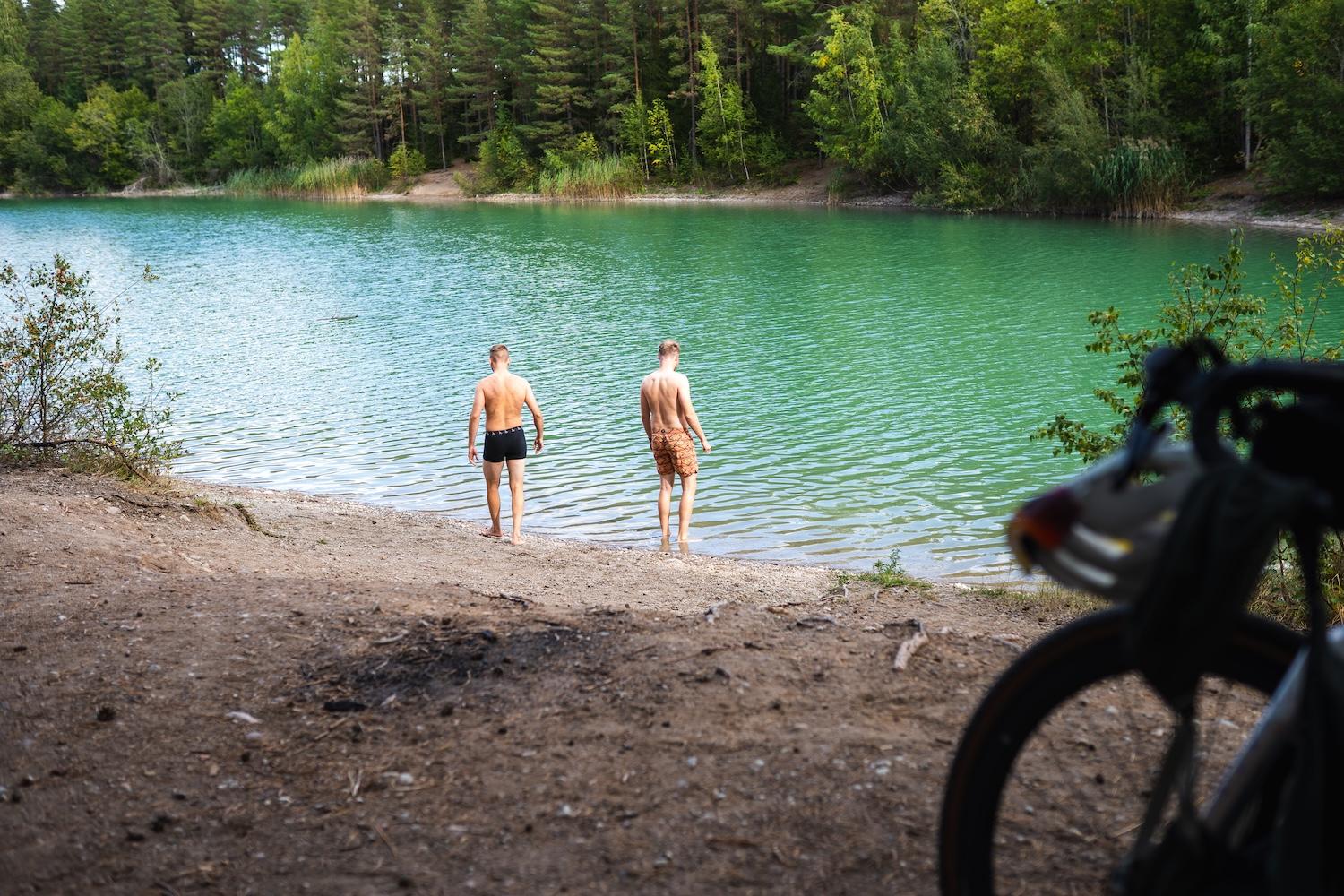
The lagoon sits in a bowl of rock and trees and the water in it is a colour you do not expect this far north – the blue of something chilled and poured, too bright to be entirely believable. For about ten seconds you are on a coast somewhere on the Mediterranean. Then you notice the birch. We were off the bikes and out of the kit and in the water in under a minute. It was cold in exactly the right way, and the two of us floated there being fairly stupid about how good it was.
Lunch happened on the edge in the sun, the Vadstena salad boxes pulled out of the bags and eaten with the slow attention of people whose legs have decided to stop for a bit. One thing, and we mean it. This place is loved by the people who live around it, and we were given it. Take out everything you take in, leave no trace that anyone stopped there, and leave it exactly as you found it. It is on the GPX because we want you to find it, and it will stay worth finding for exactly as long as everyone behaves.
Back up through the clearing, along the path, out onto the road, and into the best three hours of the whole two days. We always carry a small speaker. On this trip it came out somewhere after the lagoon, and for the rest of the afternoon one of us – it was me, it was definitely me – appointed himself DJ Mountain Man and took full and unaccountable control of the playlist.
So: warm late-afternoon sun, a breeze coming across the fields, hard dry gravel unrolling ahead, two bikes, and a small tinny speaker producing exclusively excellent music. There is not much more to report about this section, and there does not need to be. It was the part of the ride where nothing happened and everything was great.
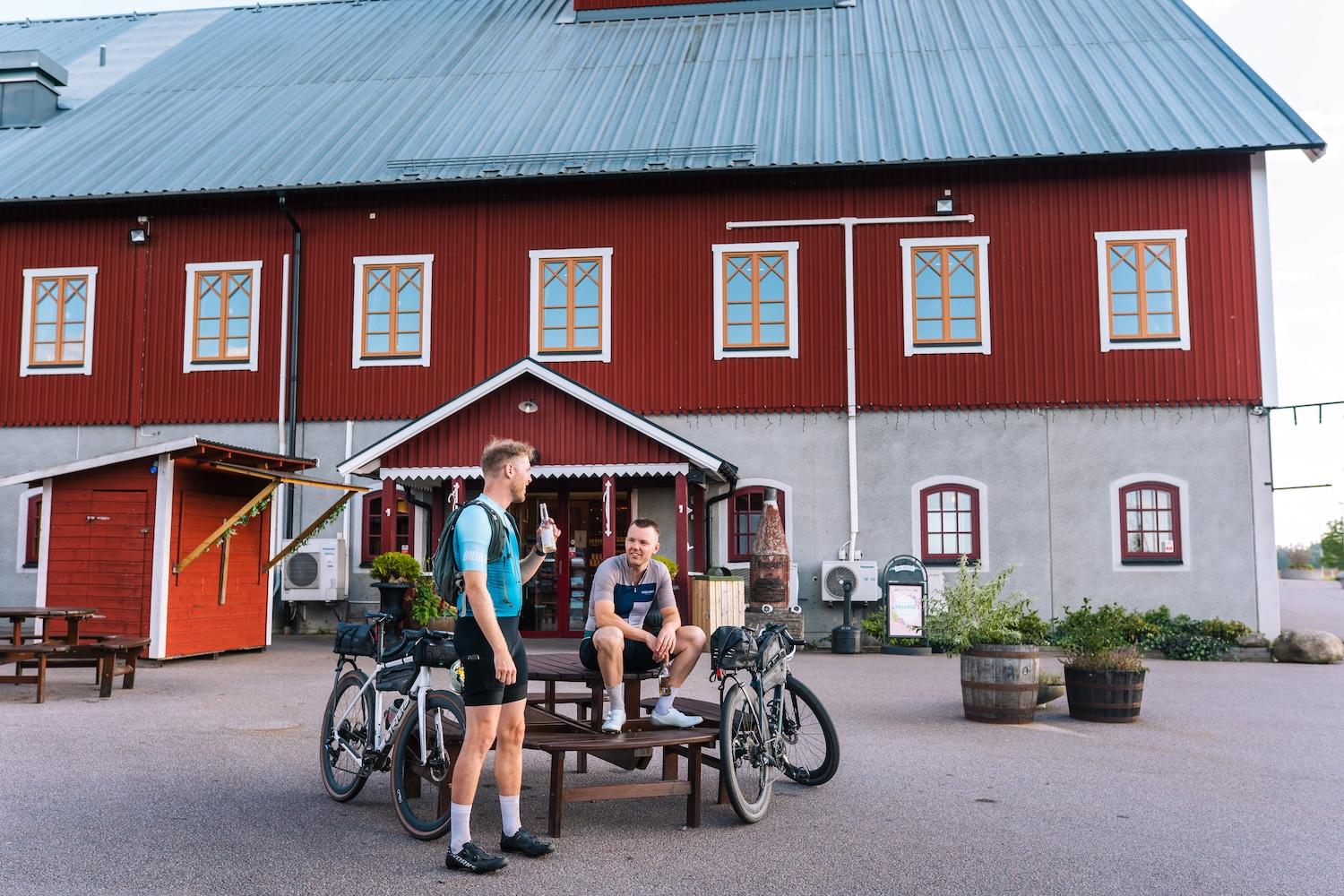
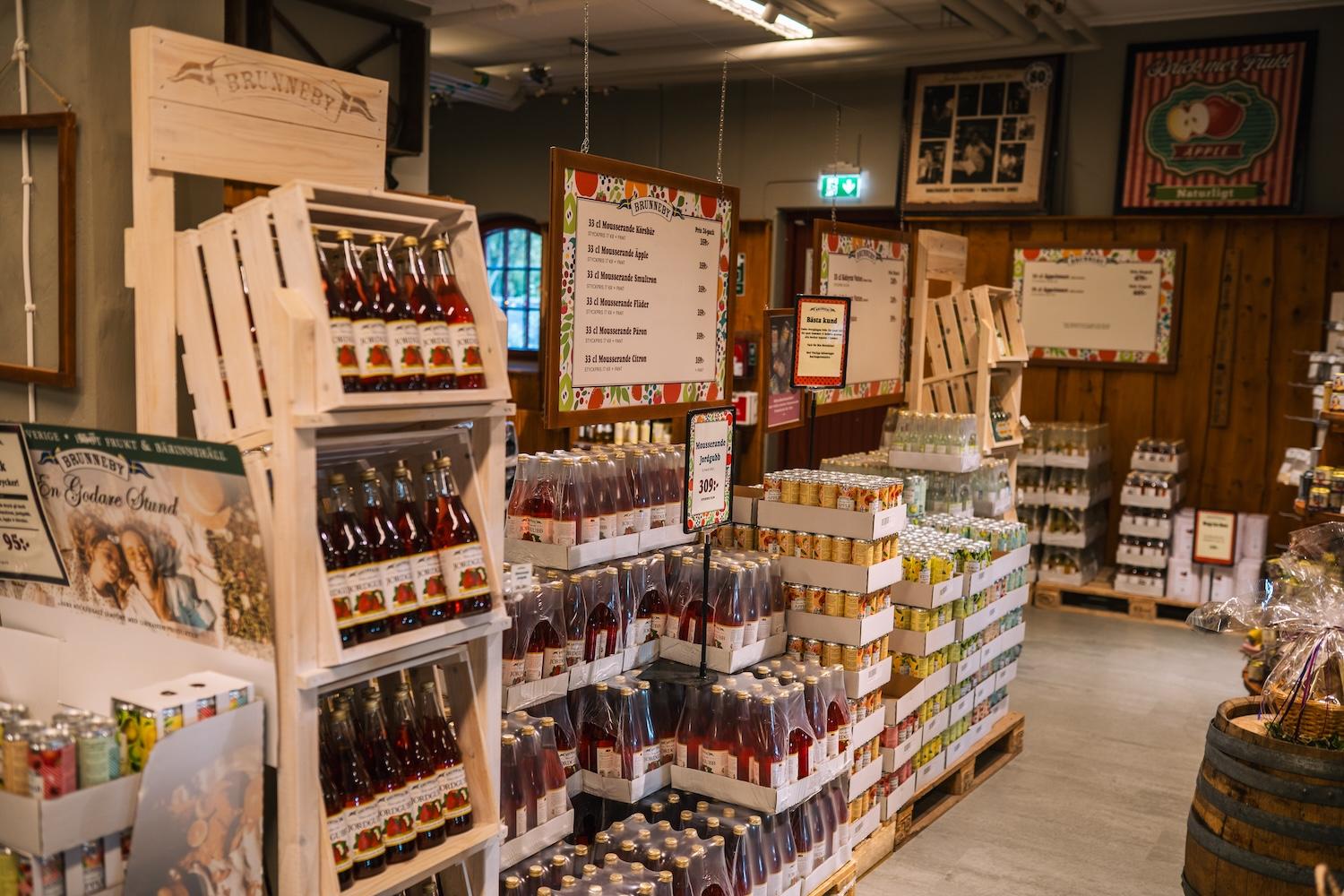
Then Brunneby. Brunneby Musteri sits just outside Borensberg, at the point where the Östergötland plain runs into the Göta kanal, and it has been pressing apples since 1941 – when Carl-Gösta Kjellin started doing it at Brunneby Gård. It is still the same family, three generations on. There is a farm shop full of must and saft and marmalade and glögg, and a restaurant, and a very good reason to stop.
The reason is the elderflower. Sparkling, cold, and after four hours of gravel it is close to a religious experience. We can recommend it without reservation and we would like it on record that we tried.
And now the second thing for anyone who has a Vätternrundan number in a drawer somewhere. Vätternrundan Gravel ran for the first time this month – Saturday the twelfth of September, days before this went up. A hundred and twenty kilometres, around seventy per cent gravel, from Baltzar von Platen's grave at Motala Idrottspark. Thirteen hundred people entered, 1,148 started and 1,133 finished, which is an extraordinary completion rate for a first edition of anything.
Their course opens by running along Boren towards Borensberg before it turns out along the canal – which is precisely the road we were about to ride, in precisely the opposite direction. Without planning it, we spent the last part of our afternoon riding the first part of their race backwards.
The canal is the sort of thing you ride alongside for twenty minutes before the scale of it lands. It was built between 1810 and 1832, on Baltzar von Platen's plan, with Thomas Telford brought over to survey it in 1808. A hundred and ninety kilometres, of which eighty-seven were dug by hand. Fifty-eight locks. Fifty-eight thousand soldiers from sixteen regiments, working something in the region of seven million twelve-hour days. Karl XIV Johan opened the finished thing in 1832.
Seven million days. For a ditch with boats in it, across a country, because someone decided the sea route round the bottom of Sweden was inconvenient.
At Borenshult there is a flight of five connected locks that lifts boats fifteen and a bit metres – the second largest staircase on the whole canal. The lock keeper's stone house has been standing there since the 1820s. And inside the middle lock, the men who built it carved their names, and the names are still there. One of the first railways in Sweden ran from Motala up to Borenshult while the digging was going on.
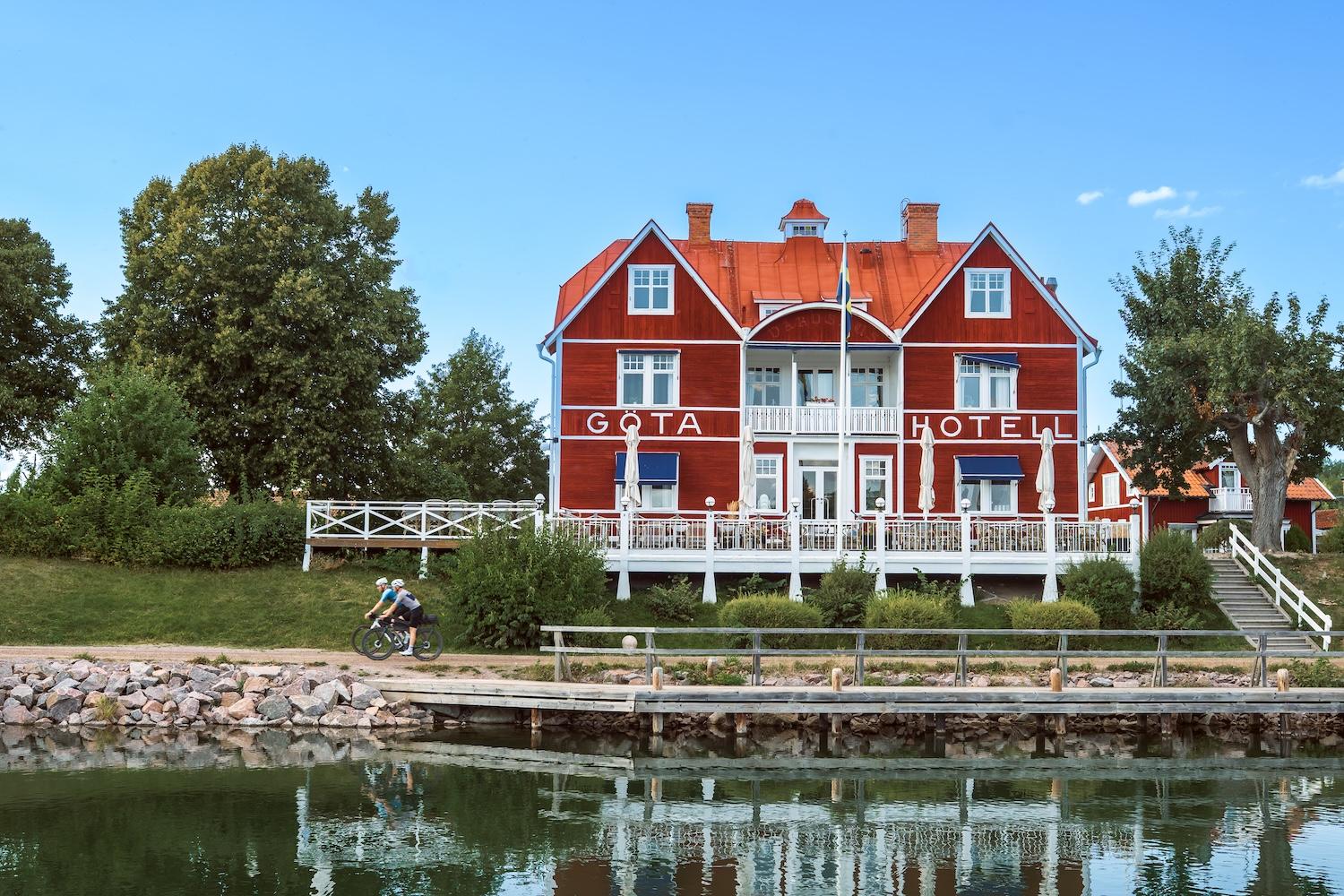
Then Borensberg, and Göta Hotell, which has been standing beside the water since 1908. It was built for holidaymakers and bath guests, who arrived on a steam train called Ankan from Linköping or Motala. The canal steamers — Wilhelm Tham, Juno, Diana – used to tie up alongside, and the passengers would climb five steps off the boat for coffee and the hotel's waffles. The hotel still advertises the five steps, which is the kind of institutional memory we find completely charming.
Then the allé at Österskog: a long straight avenue of trees over the road, light coming through in bars, the sort of thing that belongs on a French departmental road with a château at the end of it. What is at the end of it here is a canal dug by fifty-eight thousand soldiers, which is arguably better. And after that, quiet asphalt with sunflowers along the edge of it, in the last of the good light.
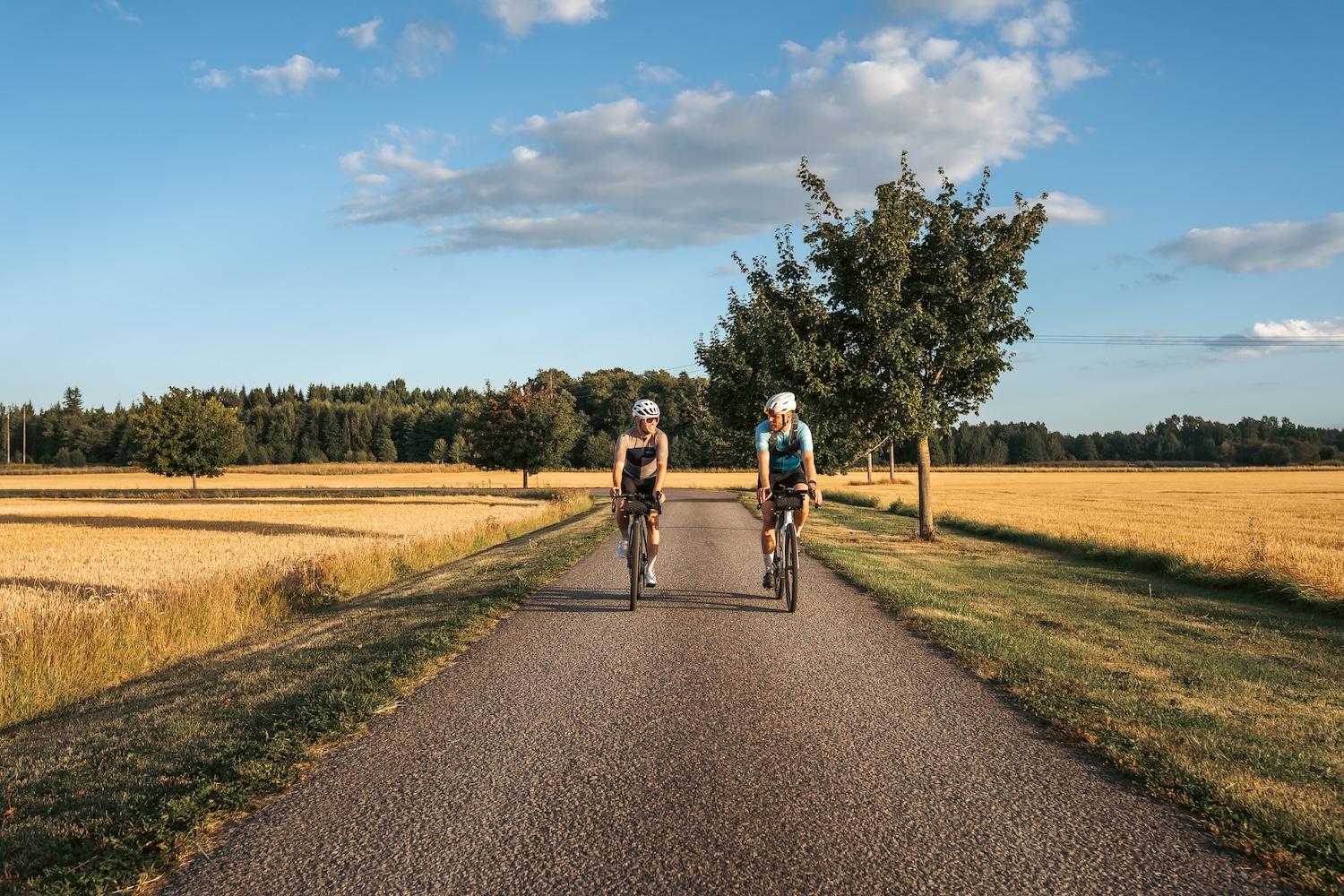
What we missed – and you shouldn't
The last gravel section, between Åby and Motala. Hard-packed, quiet, and by every account the best surface of the day.
We did not ride it. We were out of time and we took the road instead – and it is still on the published GPX, because it is the better ride and we are not going to pretend otherwise just to make our own day look tidier.
This is the honest bottom line of both articles. We rode this in two days, we were chasing the light from about Vadstena onwards, and every single thing in these boxes is something we went past. Visingsö. Brahehus. Café Kleven. The inside of a castle and an abbey. And now the best gravel of day two.
Take three days. We are not being modest – we are telling you where we got it wrong.
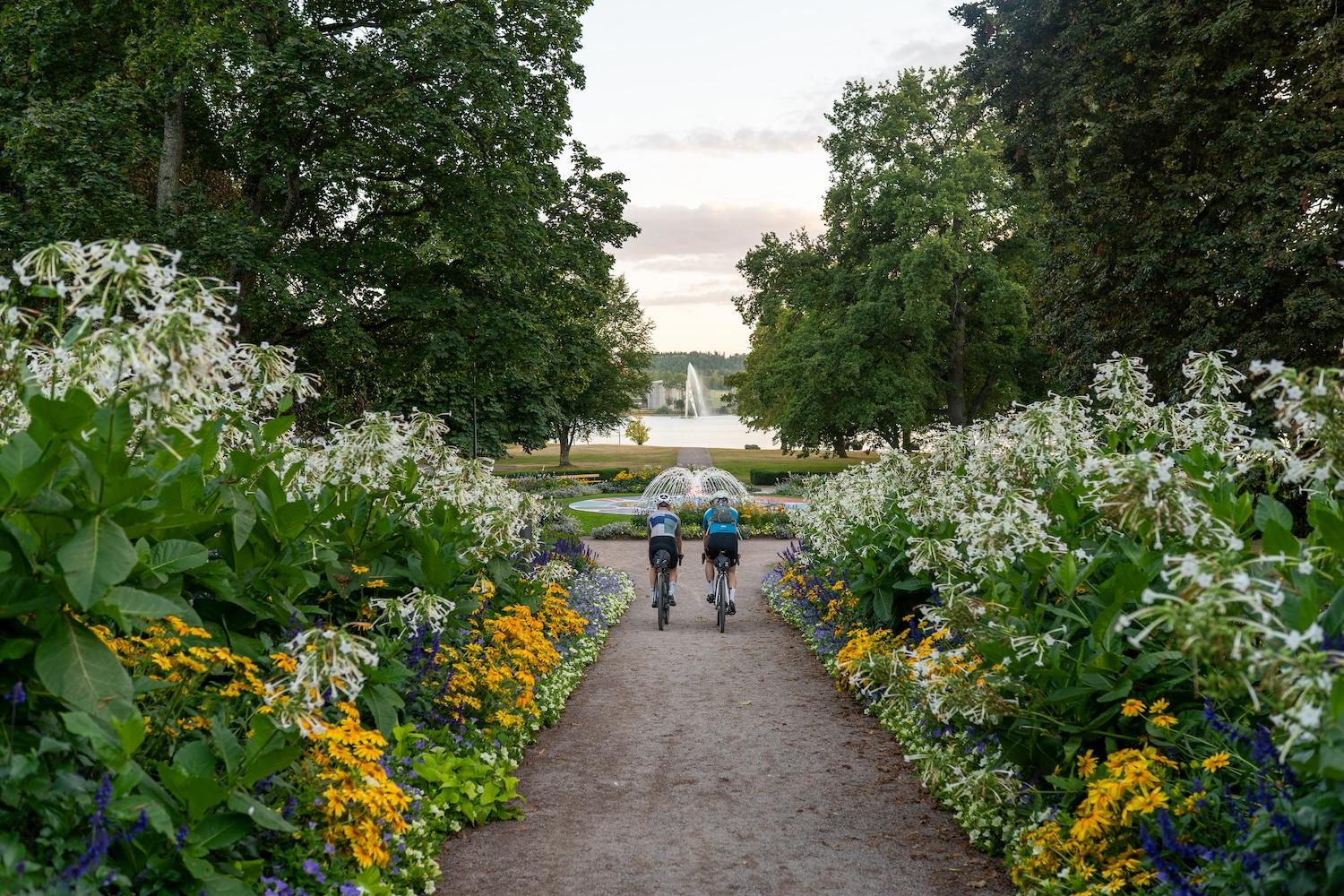
Coming into Motala you get a choice, and it is worth making it on purpose rather than letting the GPS make it for you. You can take the canal climb as one last piece of work. You can roll in along the water, quiet and flat, with the canal on one side the whole way. Or you can go straight in and be done. We took the long way, because it was the last hour of a trip and nobody has ever regretted taking the long way at the end of a trip.
And then the park. Motala's Stadsparken in the middle of September is flowers and cut grass and a smell that hits you before you have registered where you are – warm, sweet, faintly green, the specific smell of a public park at the end of a hot day. And somewhere in it, the monument, and the line.
Vätternrundan's finish. We came across it from the wrong direction. There is something quite funny about that, and we did not entirely expect it to land the way it did. We have come over that line the proper way – at the end of three hundred and fifteen kilometres, in a state where the main sensation is a kind of grateful blankness, having spent an entire night riding through the most beautiful part of Sweden and seen a taillight.
This time we came over it sideways, at walking pace, in the evening, sunburnt, smelling of lake water, with salad box crumbs in a frame bag and a hundred and eighty-six kilometres of the exact same country behind us – all of which we had actually looked at.
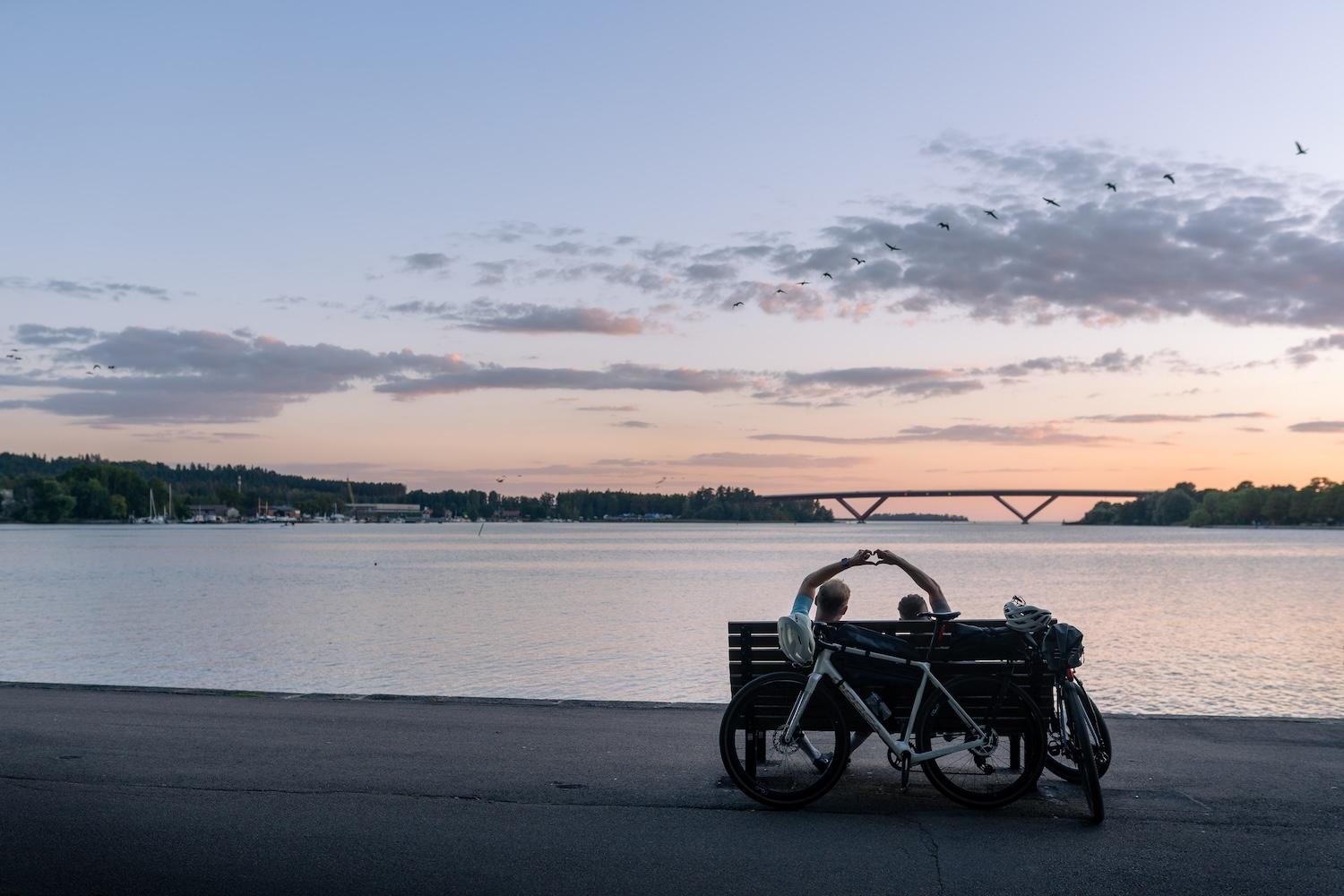
We sat down with the lake in front of us. High five. Not an ironic one.
That is the thing we would most like you to take from these two articles. This is not a secret road – thousands of people ride down it every June and it is one of the most famous stretches of tarmac and gravel in Scandinavia. It is simply that almost nobody has seen it. The cobbles in Gränna are a massage at three in the morning and a street at five in the afternoon. Omberg is a climb in a results file and a beech forest with a lake glittering through it. The road to Motala is the last thirty kilometres of a very long night, or it is an avenue of trees and a field of sunflowers and a small speaker playing bad music well.
The numbers 90.7 km · 380 m ascent · 5 h 09 min moving (Komoot estimate) Surface: 54% asphalt · 29% unpaved · 11% compacted gravel · 1% cobbles Way types: 16% path and singletrack · 10% cycleway
Two days total: 186 km, 1,320 m. Day two is the gravel day — nearly a third unpaved and three times the off-road proportion of day one. It is also barely a third of the climbing. It is not an easier day, it is a different one.
Bike and tyres Orbea Terra, 45 and 50 mm. This is the day that decides it. Nothing on the route is technical and nothing needs skill beyond being comfortable on loose surfaces — but sixteen per cent path and singletrack over ninety kilometres is a long time to be under-tyred. Go wide. You will not lose anything on the asphalt that you will not get back twice on the gravel.
Getting home Motala to Jönköping to close the loop.
What we can say: on Östgötatrafiken's trains, bikes go in the door at the staff's discretion, maximum six per train, prams have priority, and bikes are not carried at all on rail-replacement buses. There is never a guaranteed space. Build in slack.
Where to sleep Vadstena, if you are taking three days — and by now you know our view on that. Otherwise wild camping under allemansrätten, which we set out properly in Part 1. On day two the shore between Borghamn and Vadstena is the obvious ground for it.
Food and water Build lunch in the Vadstena supermarket salad bar and walk it backwards. Bageri Hamilton on Hovsgatan for the fika before it. Brunneby Musteri at around three-quarters distance — farm shop Monday to Friday 10–18, Saturday 10–16, Sunday 11–16, restaurant lunch 11:30–14:30 — and Borensberg after it.
The long gap is the middle: between Vadstena and Brunneby there is very little, and it is also the hottest, most exposed part of the day. Fill everything in Vadstena. Swedish tap water is drinkable from any tap anywhere, so this costs nothing but thirty seconds.
Best season September. The orchards are in fruit, the presses are running, and Brunneby's own Äppelfest falls on the 12th and 13th. Vadstena castle is open daily until 4 October. June gives you long light, warm swimming and the races themselves, but green trees and no must. October onwards, the fruit season closes and the opening hours thin out.
The three-day alternative – 199 km total
A different and slightly longer line than the one we rode, not ours chopped up.
Day 1 Jönköping to Gränna · 51.2 km · 560 m
Day 2 Gränna to Vadstena · 77.2 km · 630 m
Day 3 Vadstena to Motala · 70.5 km · 320 m
Day three is 70.5 km for what is a twenty-five kilometre direct line, and that is deliberate: it swings east to pick up Brunneby, Borensberg and the canal before turning back into Motala. It is the best half of our day two, ridden with time to spare. Two short walking sections: 103 m at 16.9 km and 117 m at 66.8 km.
Sometimes it’s a swim or a coffee break that helps set your wellness in motion. Other times, it’s about aiming for a new challenge. With us, there’s a ride for everyone — long, short, or somewhere in between. Choose the challenge that suits you best.