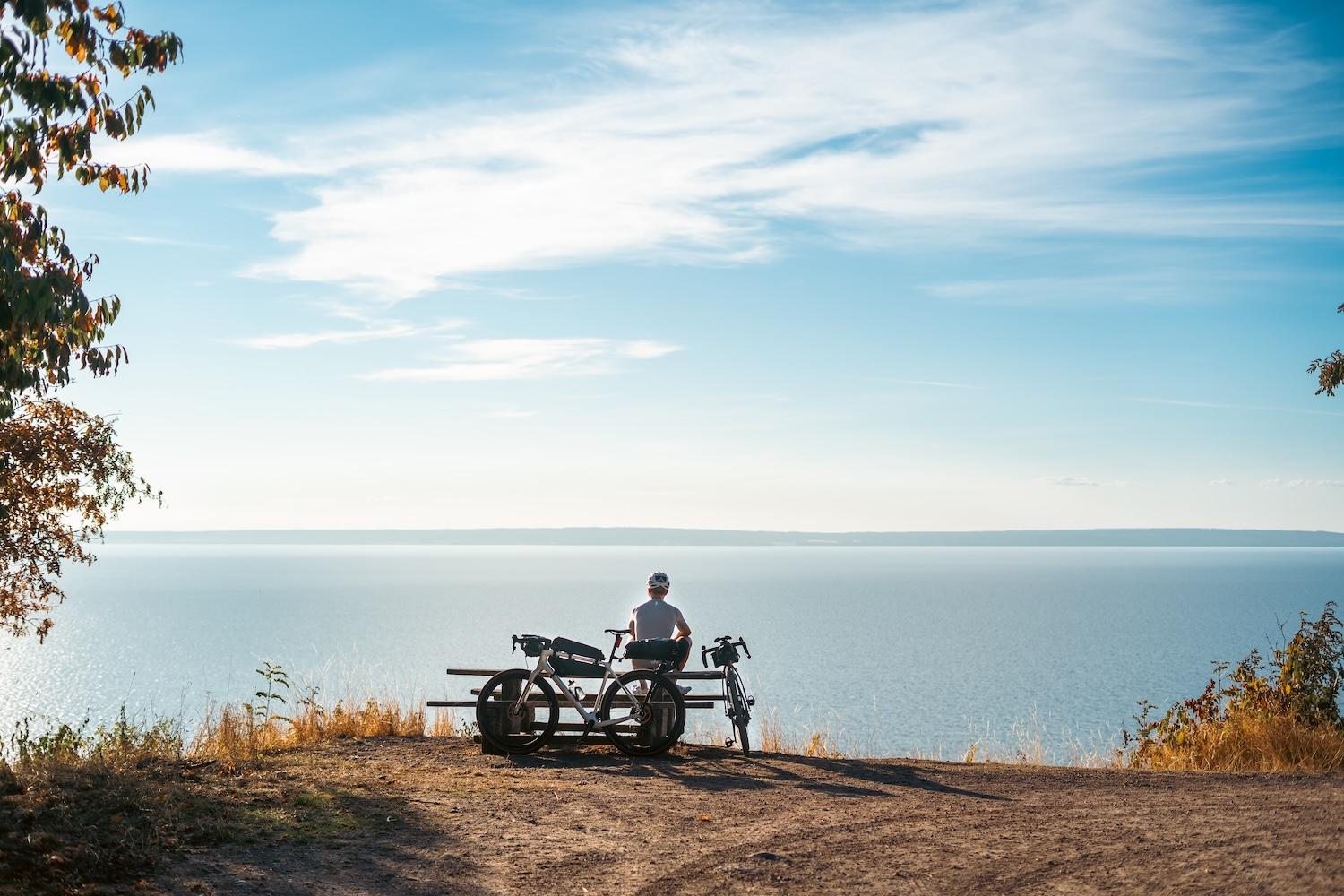
Jönköping to Motala – With a Beautiful Stay in Borghamn
The eastern side of Lake Vättern offers much more than scenic roads and spectacular lake views. Charming fika stops, sunflower fields, farms, ruins, castles, canals – even a blue lagoon... The list goes on! The Bikepack took the train to Jönköping, with their gravel bikes, to take you along on two-day ride through the Swedish summer.
Part 1: Jönköping to Borghamn
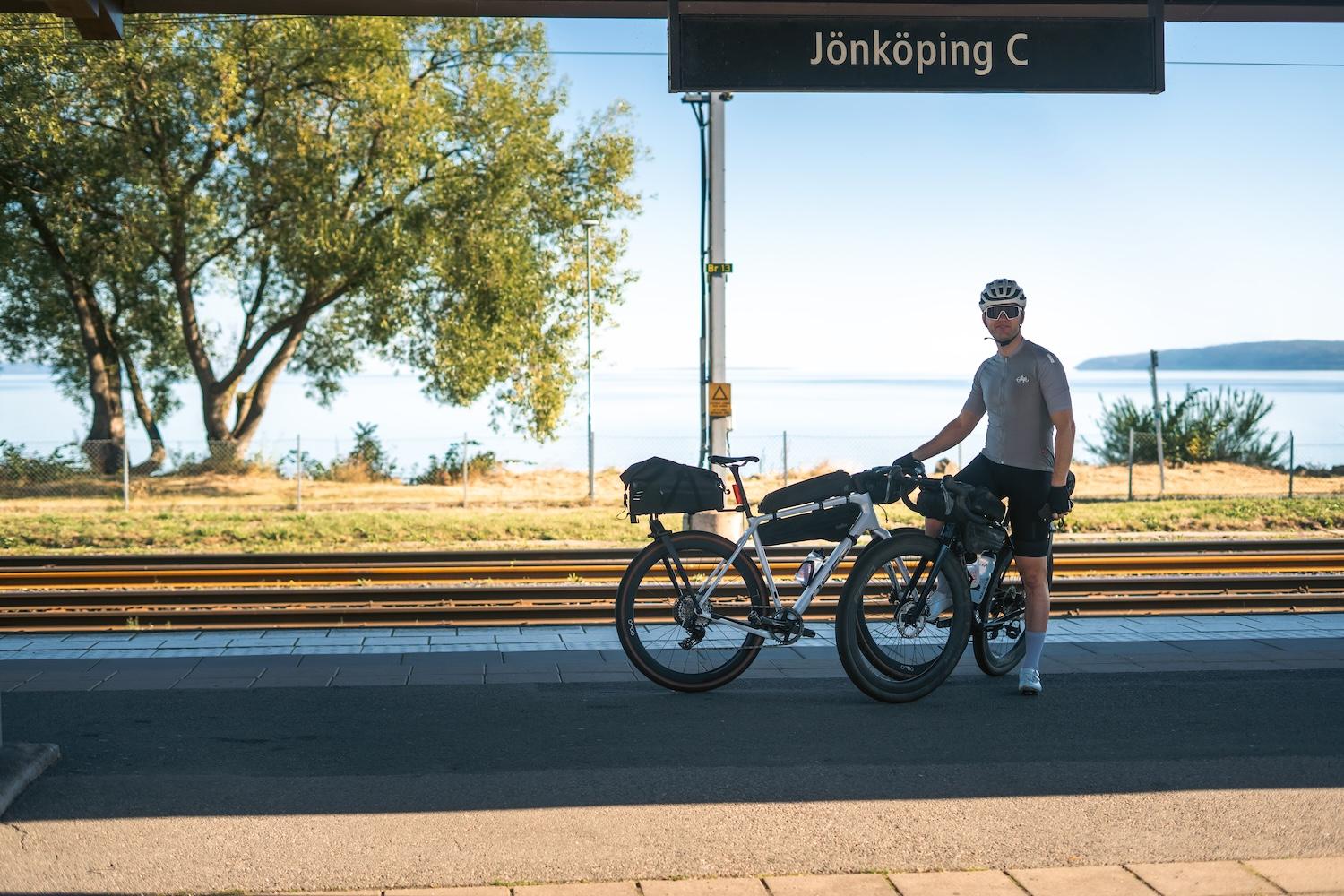
Half past nine on a Tuesday in late August, and the doors of the Krösatåg open onto a platform in the middle of Jönköping with two bikes to lift out and nobody in any particular hurry. Twenty-two degrees. A breeze coming off the water that you can feel on your arms but not in your ears. The kind of morning where the only real risk to the day is standing around enjoying it. We stood around enjoying it for about eleven minutes. Straps, tyre pressures, the small ritual of moving a phone from one pocket to another three times.
Then down to the water, because in Jönköping you are never more than a few hundred metres from it. Vätterstranden was flat calm – not calm in the poetic sense, but genuinely mirrored, the far shore doubled and hanging upside down under itself. Joggers on the path. Volleyball nets standing empty over sand that would be full by eleven. We rolled past a town that deserved more of us than it got: the water everywhere, Spira sitting there looking like it had been dropped in from a more expensive city, the cobbles, the bakery with their windows already loaded.
We are The Bikepack – two of us, bikes, an unreasonable enthusiasm for adventure – and the whole point of today was to leave. Because here is the thing about this road. Thousands of cyclists ride the eastern shore of Vättern every June, and almost none of them see it. They come the other way, in the dark, at speed, watching a taillight. We had ninety-five kilometres, a full day of sun, and no reason in the world to hurry.
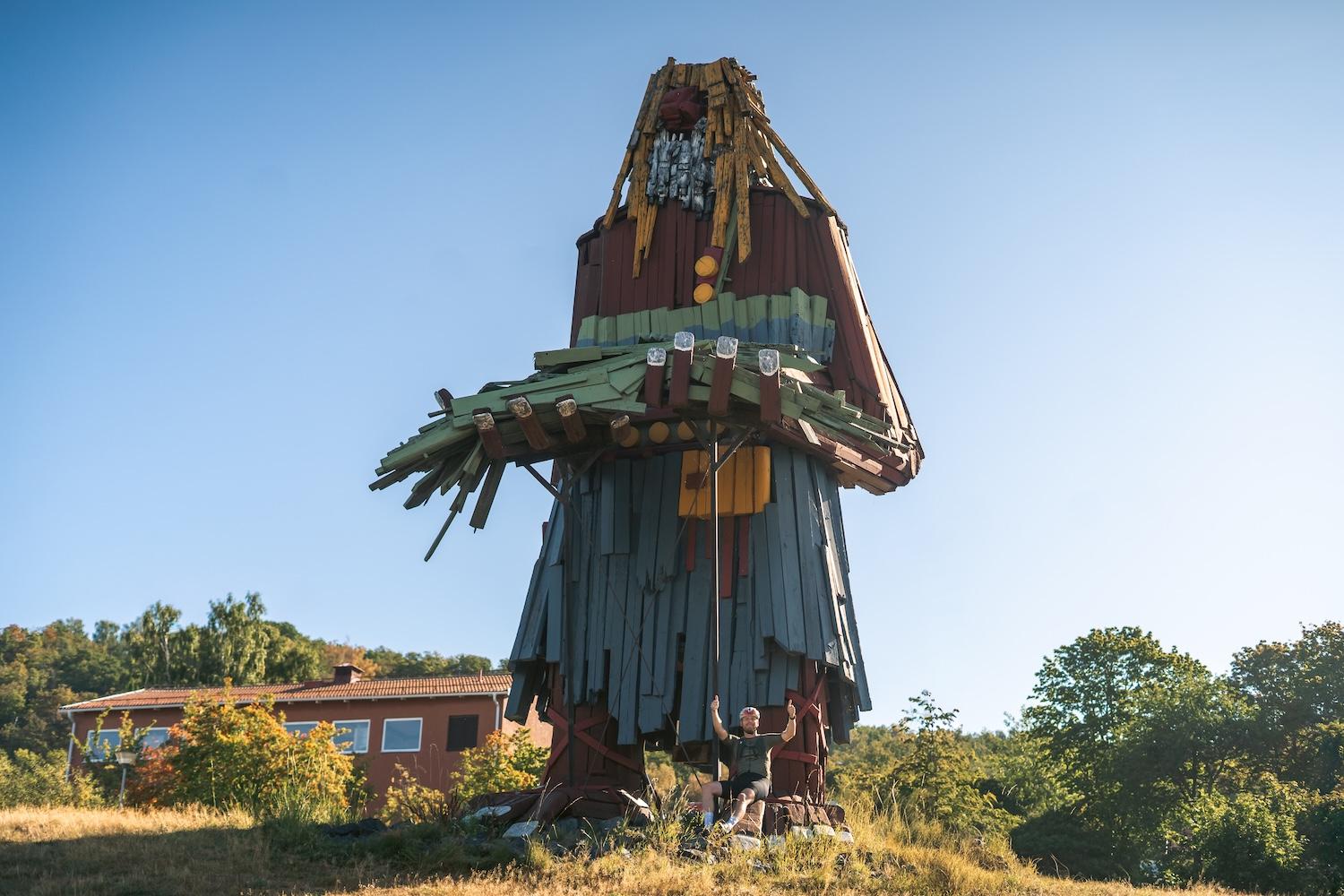
The road out of town gives you a present before it asks for anything: a long free descent from Elmia down into Huskvarna, lake on the left the entire way, past bathing places and quiet villa streets. You don't pedal. You just steer and grin. On the way out of Huskvarna there is a giant standing by the road. He has been standing there since 1969, which is when Calle Örnemark put him there, and he is holding a lump of grass.
The story goes that his wife had nothing to step on when she wanted to go out into the lake, so Vist – that was his name – tore up a piece of turf and threw it into the water for her. The piece of turf is Visingsö, the biggest island in the lake, and it is still out there. He is also said to have lived on Vista kulle. Which is the hill we were, at that exact moment, beginning to climb.
The climb out of Huskvarna doesn't announce itself. That is its best quality and its worst one. There is no wall, no hairpin, no sign – it just tilts, very slightly, and keeps tilting, and twenty minutes later you are breathing through your mouth and wondering when that happened.What it does give you, almost immediately, is height. And height here means the lake opening out below on your left, wider with every switchback of the road, until you are riding along the rim of something.
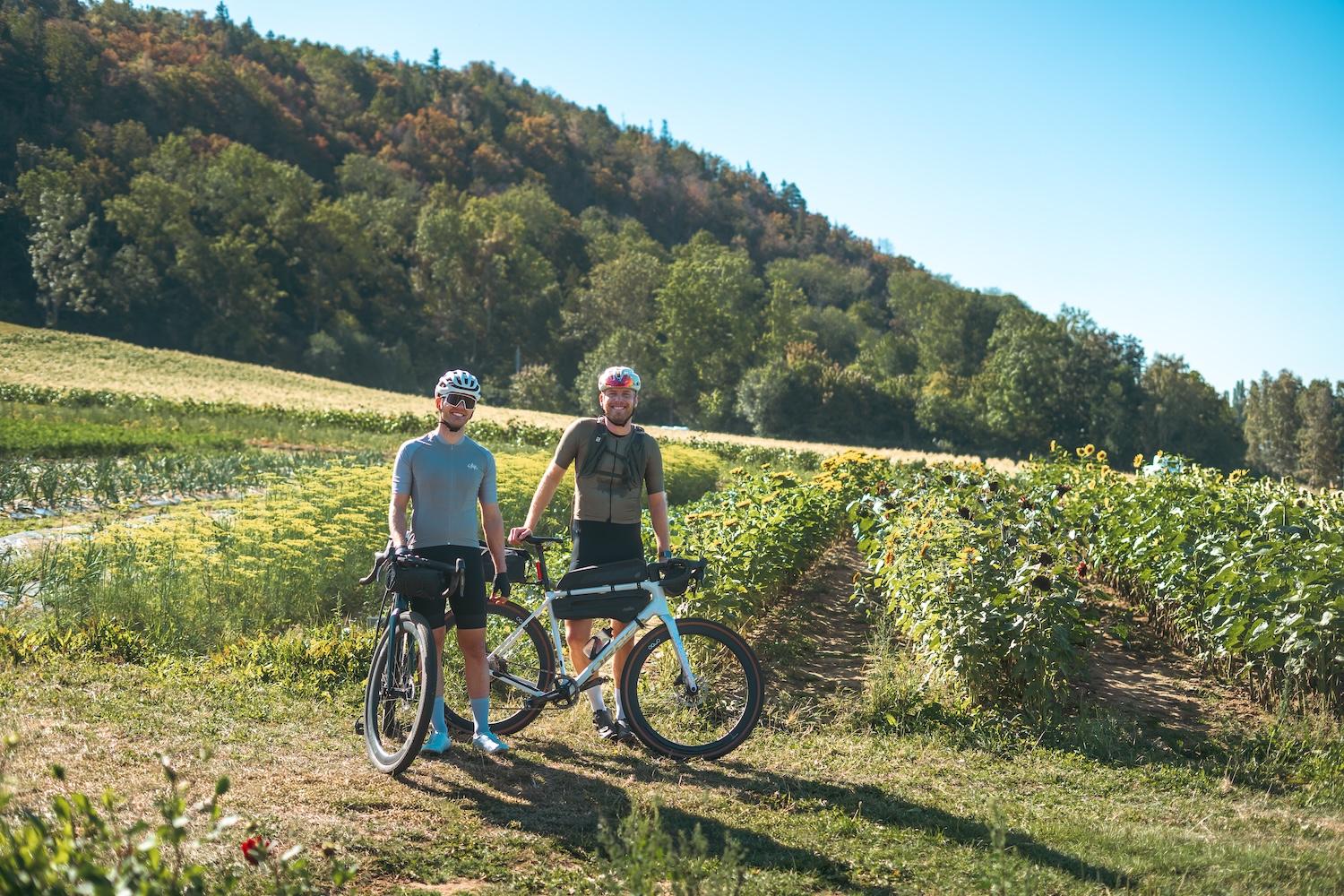
We stopped at a sunflower field. Partly because it came directly after the steepest part, which we have decided to call tactics. Mostly because it was a field of sunflowers with a sign inviting you to cut your own, and there is a limit to how much of that a person can ride past. Strands Gård has been in the same family since 1896 – currently two brothers, a farm shop that's open all year, cows, maize. In late summer they open the fields and you walk in among them with a bucket and an honesty box. Nobody watched us. Nobody needed to.
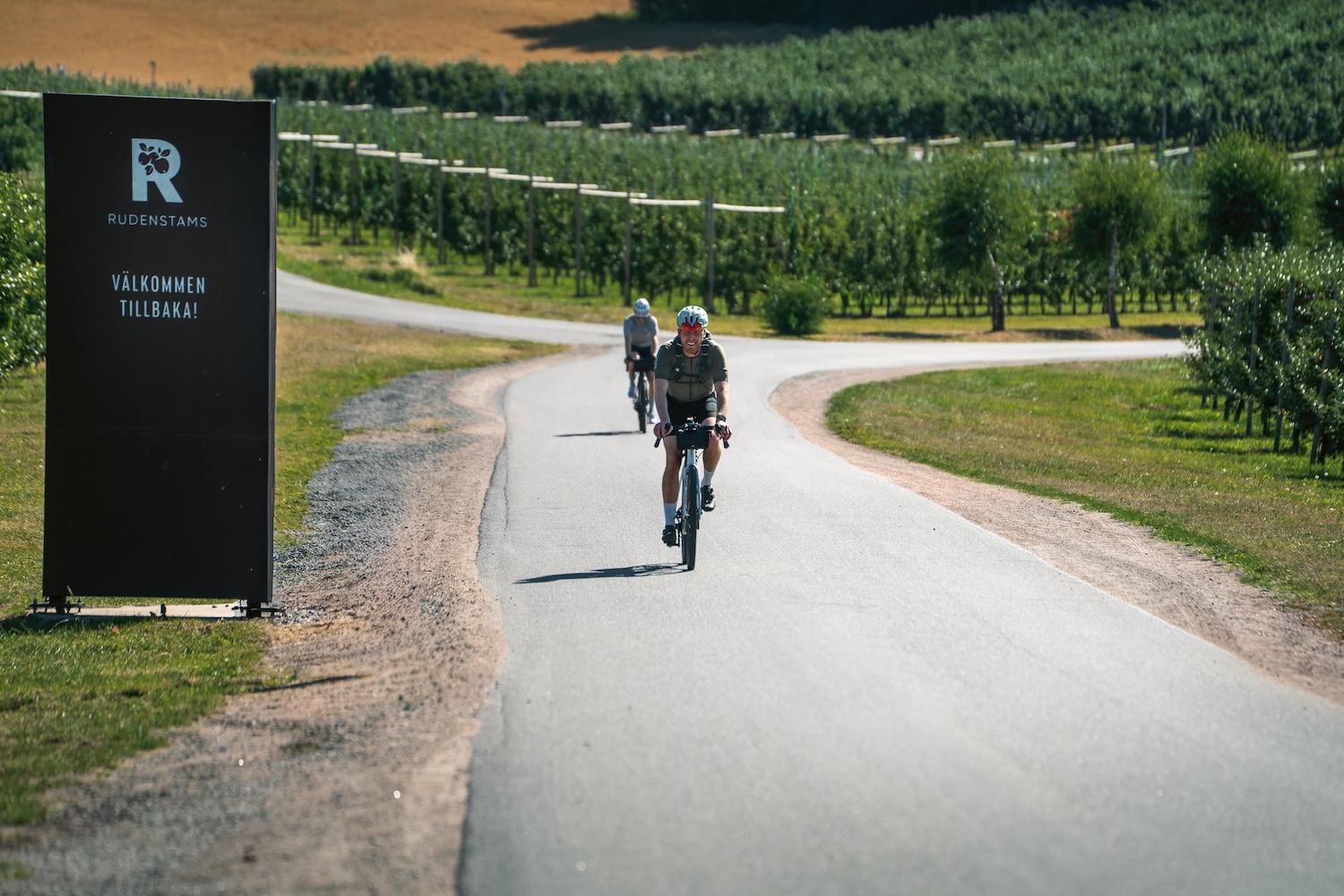
Then more climbing, and the land changes.Orchards arrive on both sides of the cycleway and keep going — rank after rank of low, heavy, carefully spaced trees on a south-facing slope with a lake underneath it. For about two kilometres you could be somewhere in Tuscany, in September, on a road with a different name. Then a Volvo goes past towing a trailer of apple crates and you are extremely in Sweden again. The valley is in on the joke, incidentally; they call themselves Smålands Toscana, and have done for years. At the top of it – which is also, conveniently, the top of the climb – is Rudenstams.
They have been growing fruit and berries here since the 1940s. There's a farm shop, a “musteri” pressing juice and making cider, and a café-restaurant with what turned out to be one of the two best views of the day: orchard in the foreground, Vättern doing its enormous blue thing beyond.
We knew in seconds that we were eating there. Not from the menu – from the faces of the people already eating. We had the grilled Bjäre chicken with vinegar potatoes, roasted pointed cabbage, marinated nectarines and herb mayonnaise. And then, on the second run at the salad and bread buffet, at the very end of the counter, we found a large bowl of chocolate-covered raisins. We took what we felt was a reasonable amount, sat back down in front of the come-and-help-me view, and ate dessert.
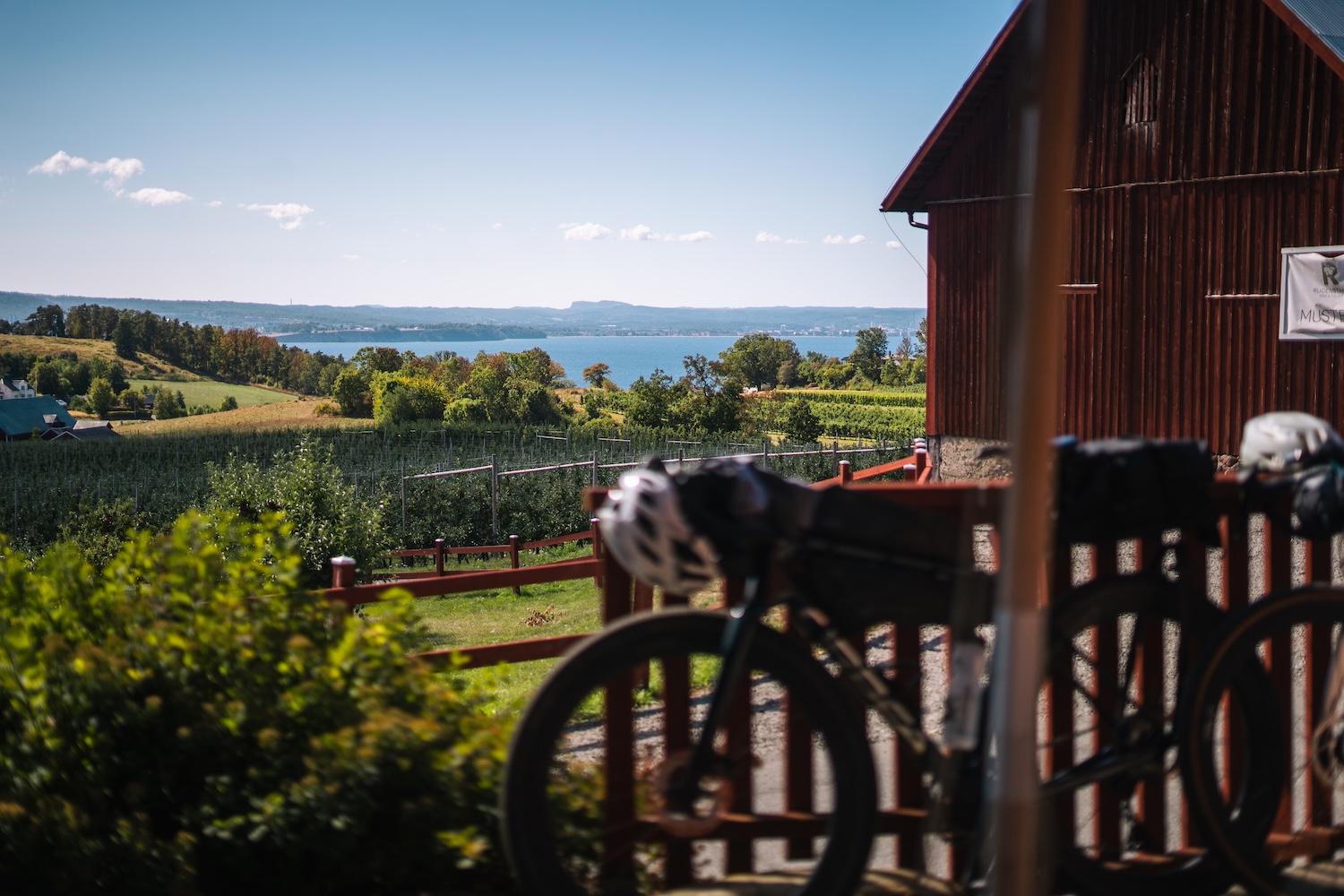
If you like must / pressed cider, this is your place – the shop is full of it, single-variety and blended, and they make Rudu Cider on site, which has been named Sweden's best semi-dry cider three years running at Cider-SM. You can also book a Fruktsafari out through the orchards, or a proper tasting.
What we missed – and you shouldn't
The Apple safari and the tasting at Rudenstams. Both are bookable, both go out into the orchards we could see from the table, and we did neither, because we had a hotel ninety kilometres away and a hill still to finish.
If you are riding this in three days rather than two, book one. You will be at Rudenstams by late morning on day one with nothing but a short roll to Gränna ahead of you, and the difference between "we ate lunch at an orchard" and "we spent two hours in one" is the difference between a nice ride and a trip you talk about.
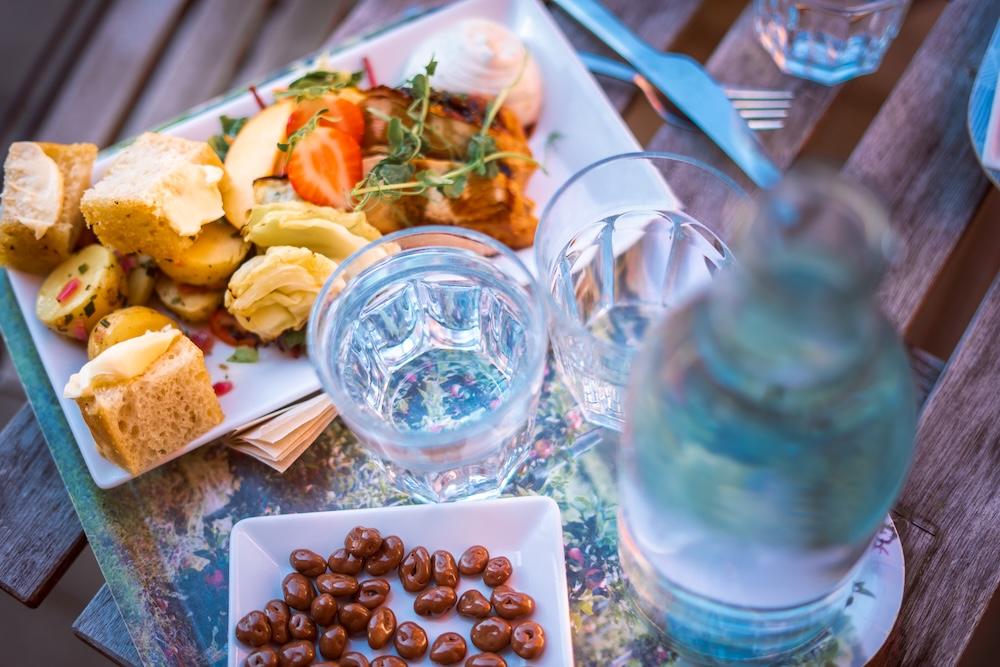
Here is something we would like on record: chocolate raisins work. The climb out of Huskvarna is not finished when you reach Rudenstams, and we went back at the remainder of it with what we started calling "snappy legs" – a condition that lasts roughly as long as the sugar and should be spent immediately. Because if something goes up it has to come down, and after the last of the climbing the road finally let go: long, steep, beautifully surfaced and over far too quickly.
What follows is flatter – open fields sloping down towards the edge of the lake, big sky, very little shelter. Which meant wind, and because of the way the road runs, it meant crosswind. Twenty minutes of leaning into nothing. It is the only part of the day we would describe as work.
And then the cycleway, which we are fairly sure has no end. It just goes: smooth, separated, empty, unrolling through farmland and pine and sudden openings where the lake appears again like something you'd forgotten you owned. This is the quiet surprise of the whole route — you keep expecting the landscape to settle into one thing and it refuses. Glittering water, Småland farmyards, gravel lanes, stubble fields, close dark forest, and then water again.
Just before Gränna the route ushers you straight through the golf club, which sits south of town near Västanå. One moment we were on gravel with two days of kit strapped to us; the next we were rolling along immaculate paths between immaculate lawns, past people in trousers we could not have afforded, nodding hello. We waved. They waved. We rode on and agreed, with total confidence and no evidence whatsoever, that every single one of them had thought: I wish that were me. Then the road tipped over the edge into Gränna and turned into something else entirely – a proper winding descent, switching back on itself, even delivering a mind boggling hairpin. We came down laughing.
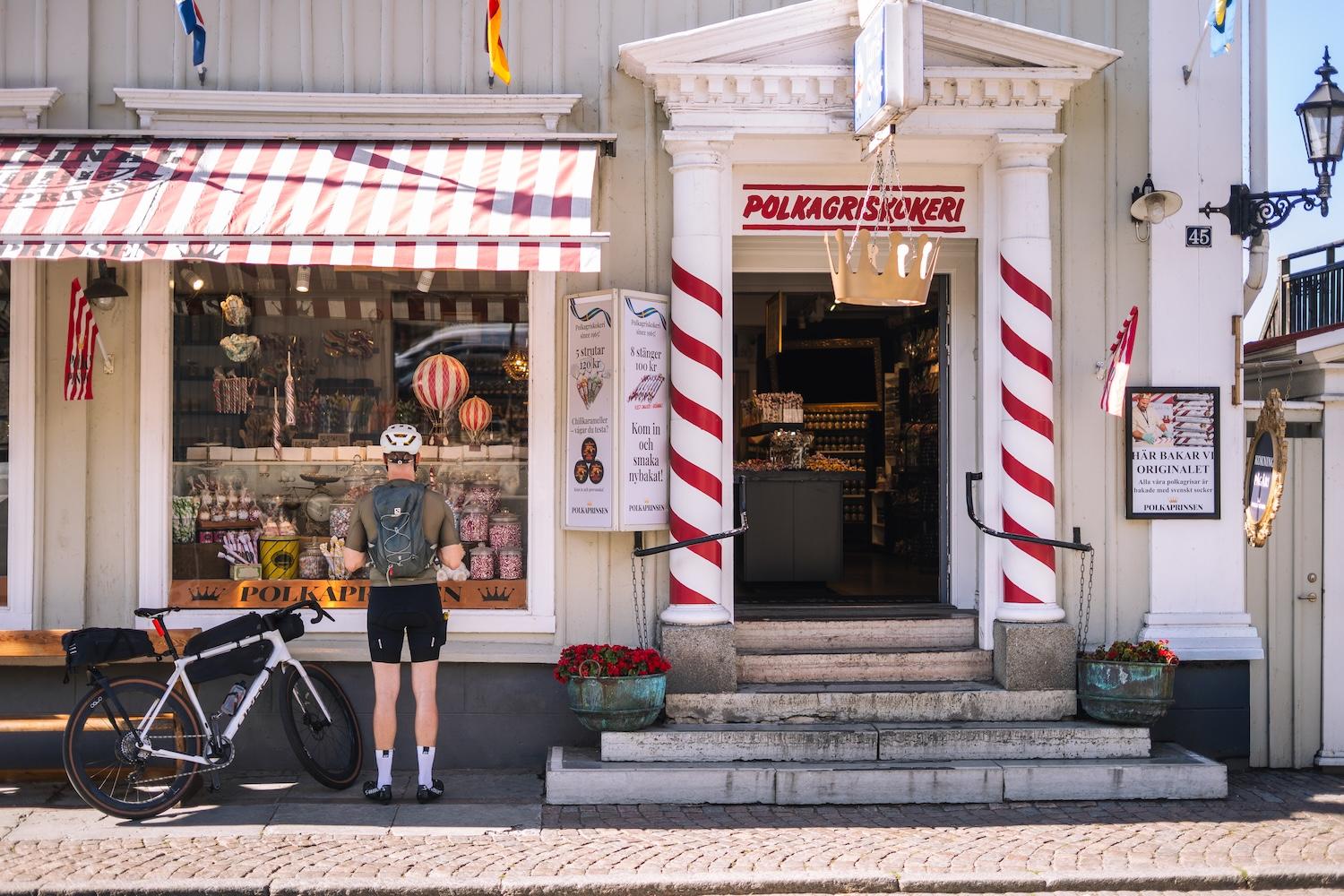
Gränna is a sweet town in the literal sense, and it was built on purpose. Per Brahe founded it in 1652 as one corner of a triangle – Brahehus up on the ridge, Västanå to the south, and Visingsborg out on the island. The candy came two hundred years later, and it came from a hard place. Amalia Eriksson married a tailor in 1857 and was a widow within days, with a newborn daughter and nothing. In January 1859 she was granted a licence to make and sell a peppermint stick. Gränna now turns out something like ten million of them a year, and only the ones made here can be sold as äkta Gränna polkagris.
We knew the town already. We loved it already. But every previous visit had been at racing speed – the cobbles coming up through the bars like a foot massage administered with a hammer, the shops flashing past, and that familiar, specific ache of wanting to stop and knowing you can't. This time we stopped for as long as we liked.
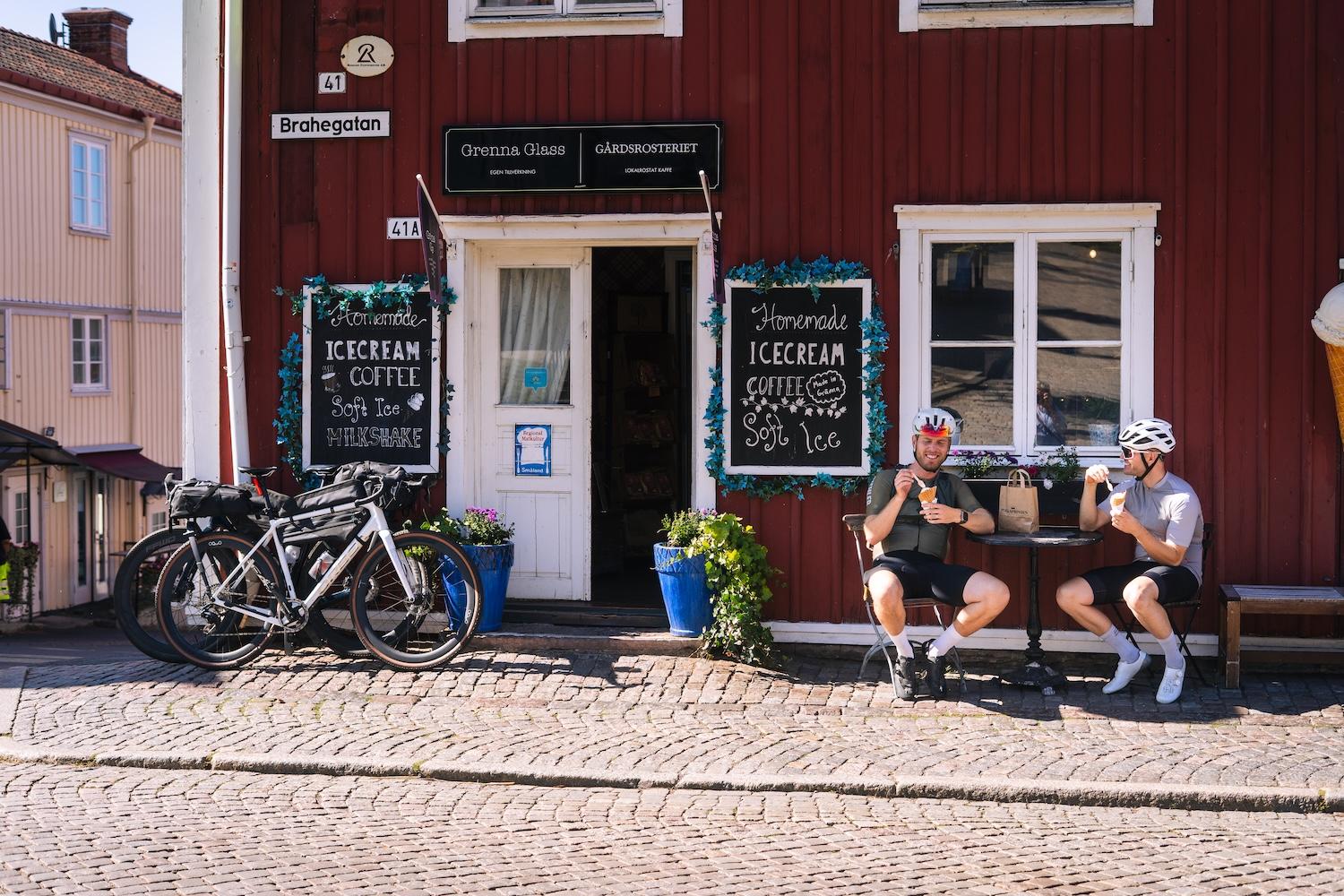
We watched candy being boiled and pulled in a window – the sugar going from molten to matt, the red stripe laid on and twisted in, the whole rope hauled and folded by hand. We ate ice cream in the sun on a cobbled street. We did the shops properly, with no dignity at all. We also, at this point, had a small problem: the battery for the electronic gears had given up completely, poor preparation on our end but it happens. So we asked in one of the candy shops whether they'd mind charging it, and they did not mind at all.
And this is the part where, if you have ridden Vätternrundan, you should probably sit down. The 315 starts in Motala at half past seven on the Friday evening and runs clockwise, so it comes down this shore first. Ödeshög is the first depå at 47 kilometres. Ölmstad is the next at 83. Gränna sits between them, at around seventy kilometres in – which means Gränna is not a depå at all. Chances are big that you came over these cobbles somewhere between midnight and four. In the dark. In a bunch. Without stopping. Past a hundred and sixty-odd years of confectionery. You have been here. You have seen absolutely none of it.
What we missed – and you shouldn't
Visingsö. The ferry leaves from the harbour and takes 25–30 minutes; in summer it runs from early morning until well after midnight. You can hire a bike on the other side, and the island gives you oak forest, the ruins of Näs, the tower at Kumlaby, Tempelgården and Iron Age grave fields.
Brahehus, which we rode underneath and enjoyed from below. Per Brahe started it in 1638 and finished it in 1651 as a dower house for his wife, Kristina Katarina Stenbock — who died in 1650 and never saw it. He used it for entertaining instead. It burned on 29 September 1708, when a fire in the village of Uppgränna climbed the hill and took it. What's left stands 180 metres above the lake, and the view is the reason to go up.
Three days, not two?
We rode this in two days. That is exactly why we are telling you to take three. The three-day version is not our route cut into pieces – it is a slightly different and longer line, 199 km against our 186, and it puts night one in or near Gränna. Which means you arrive here in the afternoon with the whole evening free, take the ferry to Visingsö, and ride the island in the low sun instead of reading about it in a box like this one. Day 1 – Jönköping to Gränna · 51.2 km · 560 m
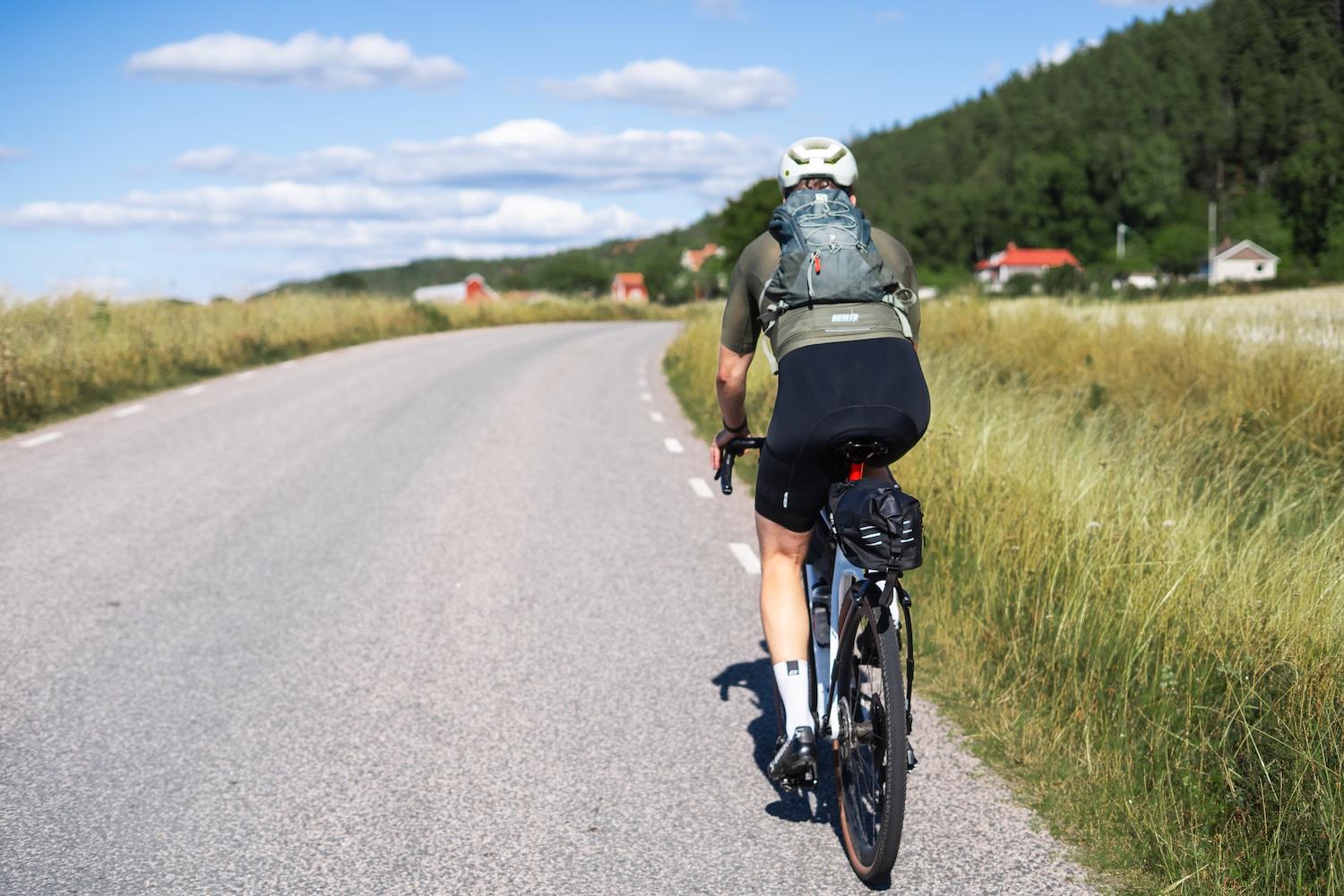
Out of Gränna the cobbles stop as abruptly as they started and the road settles into something long and easy. Brahehus sat up on the ridge to our right, catching the light, and we let it. Then the climb at Uppgränna. Steady, well-graded, nothing vicious about it – and either side of the road, standing grain in that late-August colour that is not quite gold and not quite grey, with the lake behind it as a flat blue bar. It is one of the best three minutes of the day and it costs almost nothing. And a little further on, Café Kleven – which was shut.
What we missed – and you shouldn't
Café Kleven. Homemade cakes in an old-fashioned room, ostkaka, and at least seven kinds of biscuit. No lunch — this is a fika place and makes no apology for it. It sits roughly ten kilometres north of Gränna, between the old Riksettan and the E4. If you pass it and it is open, there is no decision to make, stop.
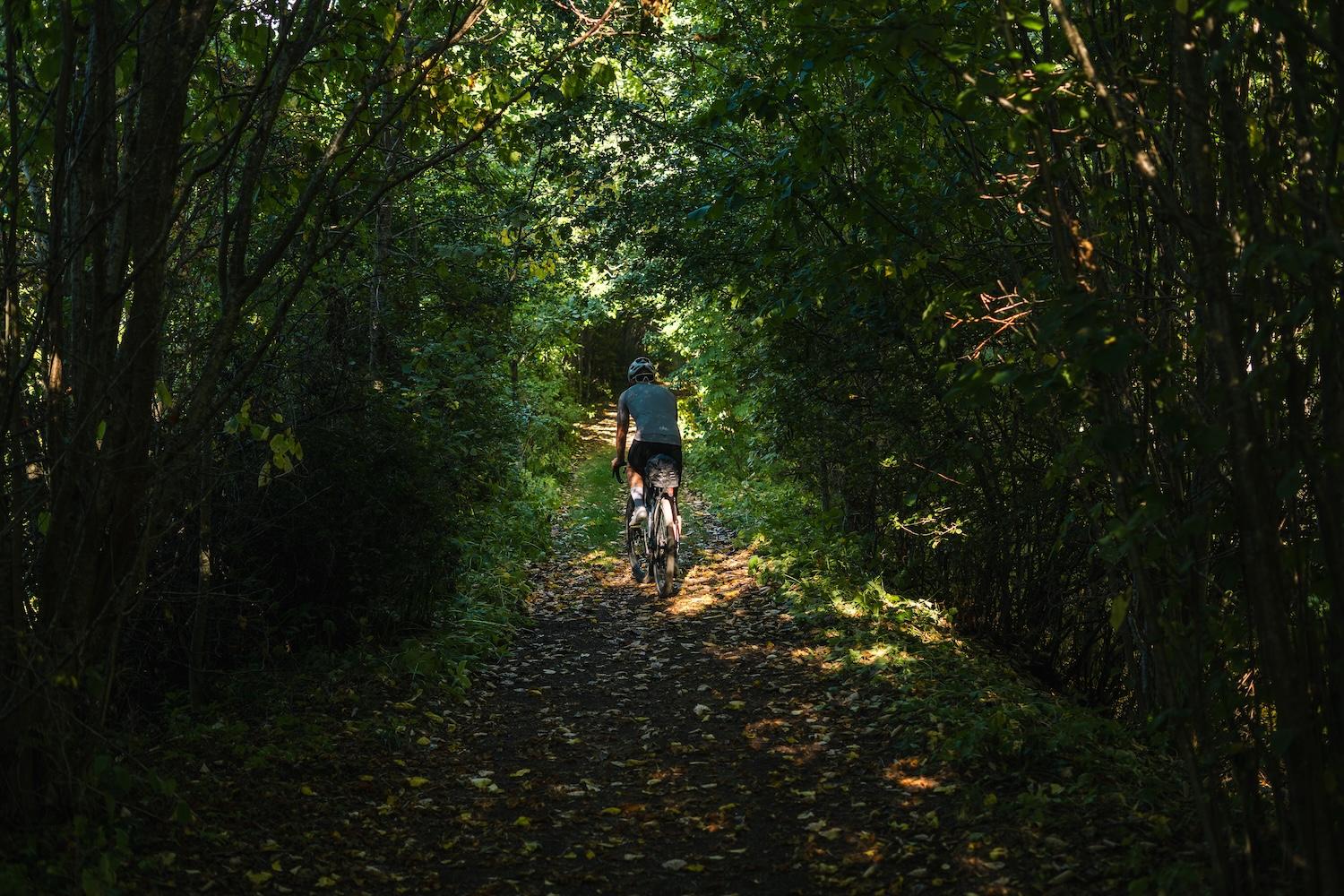
Then down, off the ridge and back to the level of the water, into leafy shaded forest and small roads with grass up the middle. Then out again, onto the long straight cycleway that runs north from Ödeshög through potato country – this is Vätternpotatis land, and there is a factory at the end of it turning out a hundred tonnes a day for the nation's canteens, which is one of those facts that improves a landscape rather than spoiling it.
The straight also came with a headwind, and headwinds on a dead-straight cycleway are a specific kind of demoralising, because you can see exactly how much of it there is left. So we started waving. Every person we passed – in a garden, on a tractor, walking a dog at the edge of a field – got a wave, and almost every one of them waved back. We rode about four kilometres per hour faster for the next twenty minutes on nothing but that. Try it. It is free, it works, and the worst case is that you look friendly.
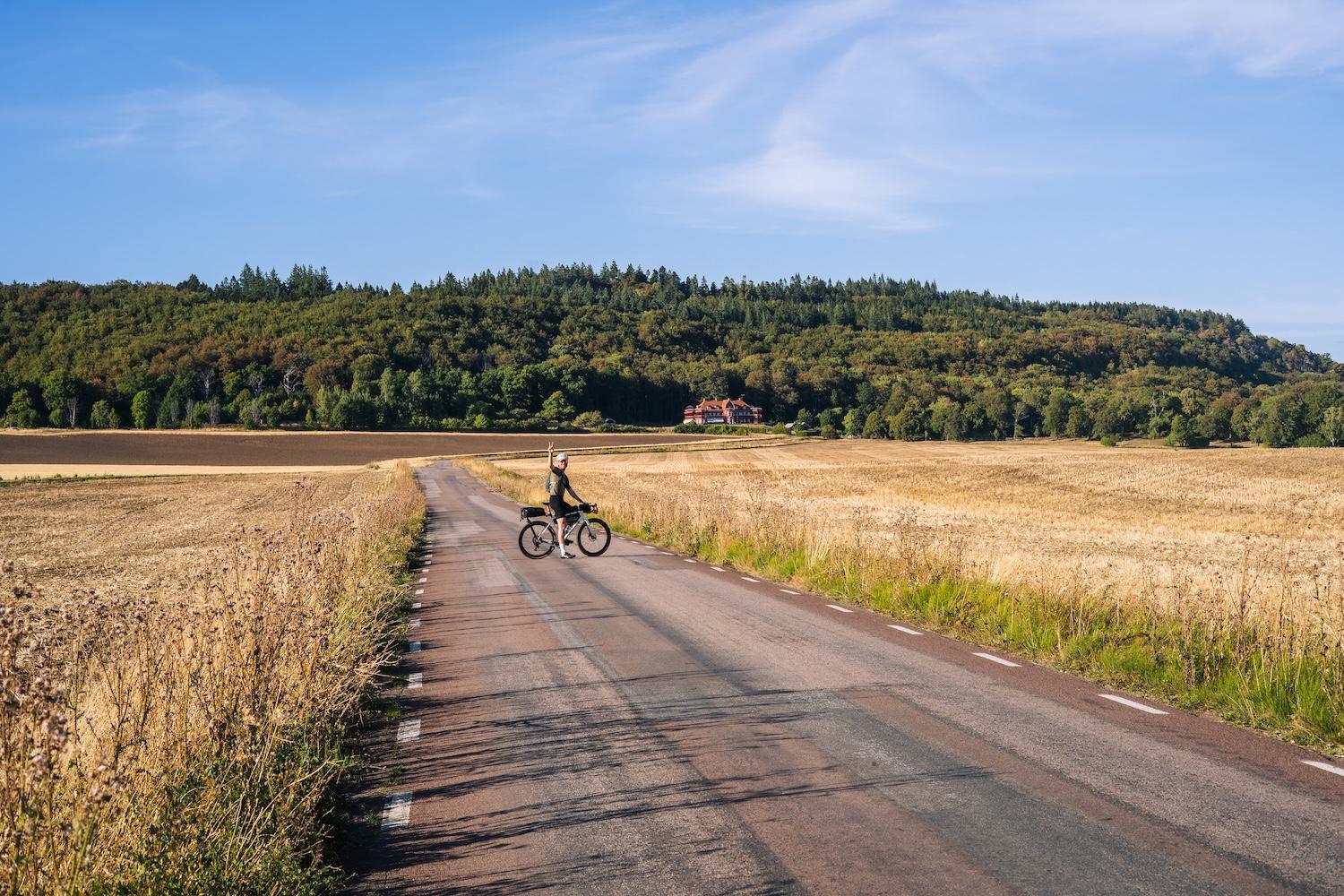
The land tips down towards Alvastra and you arrive at the foot of a ruin. Cistercian monks came here from Clairvaux in 1143, on land given by King Sverker I, and finished the church in 1185. Four kings are buried in it. What stands now is low grey walls in mown grass with a mountain rising behind them, and the scale of the thing only registers when you ride the length of it.
Then Omberg.The road turns up into Sveaskog's ecopark – seventeen hundred hectares of it, rising to Hjässan at 264 metres, a granite hump that drops straight into Vättern on its western side with caves cut into the base where the water has been working on it. We came past a beautiful hotel, Ombergs Turisthotell, at the foot of it and started climbing into trees.